Box Braids: Everything About Braiding, Types, Prices and Choosing a Stylist

In this comprehensive guide, I'll share everything you need to know about box braids - from fundamental techniques to professional insider secrets. You'll discover various braiding methods, current pricing, and essential care routines for this protective style. I'll also walk you through mastering the technique yourself and highlight what to look for when selecting a braiding specialist.

@manila.braids.studio
Understanding Box Braids and Their Rising Popularity
Box braids represent a protective braiding technique involving numerous small, sectioned braids that originated in Africa. For centuries, these styles served practical purposes on the continent - shielding hair from harsh sun and dust while eliminating daily styling routines.
Today's women embrace box braids for their convenience factor. Picture this: braid once and forget about daily battles with blow dryers and flat irons for 2-3 months straight. This approach particularly appeals to busy mothers, athletes, and career-focused women who lack time for extensive morning hair routines.
Another major advantage lies in the dramatic transformation possibilities without damaging your natural hair. Dreaming of long magenta strands? Simple! We incorporate synthetic hair in your desired shade - instant new look. When you're ready for change, just unbraid and return to your natural style.
Celebrity influence propelled box braids into mainstream fashion. When stars like Alicia Keys, Zoe Kravitz, and other A-listers started showcasing these styles on red carpets, millions wanted to recreate the look. The trend reached America about a decade ago and continues gaining momentum.

@afrochance
Box Braid Varieties: Classification by Technique and Materials
Multiple braiding approaches exist within the box braid category. They differ in added materials, execution techniques, and final appearance. Let's examine the main options so you can select what works best for your needs.
Traditional Box Braids Without Extensions
The simplest approach involves braiding exclusively with your natural hair without any additions. This works for those with hair longer than 4-5 inches. The resulting braids appear thin, maintain your natural color, and feel lightweight.

@cornrows_studio
Benefits of extension-free box braids:
- Completely natural appearance
- No additional weight on your scalp
- Zero risk of allergic reactions
- More affordable service cost
- Easier removal process

@kosa_zefir
These braids work perfectly for first-time box braid wearers or those with sensitive scalps. Typical wear time runs 4-6 weeks before requiring touch-ups or complete removal. The main drawback involves limited visual impact with shorter or thinner hair.
Box Braids with Synthetic Hair Extensions
Synthetic braiding hair consists of artificial fibers that closely mimic natural hair texture. Made from specialized synthetic materials resistant to sunlight and moisture, these extensions get incorporated into each section during braiding.

@misssonyanicole
Synthetic hair advantages:
- Braiding possible on very short hair (2+ inches)
- Length options up to 40 inches
- Extensive color palette from natural to neon shades
- Full, voluminous results
- Extended wear time up to 3-4 months
Generally, synthetic hair braids weigh more than natural-only styles. Initial headaches may occur but typically subside within days. Quality matters significantly here. Premium synthetic hair feels soft, doesn't shed excessively, and lacks chemical odors. Cheap alternatives can irritate skin and appear unnaturally shiny.

@h.sandraa_
Synthetic hair costs range from $8-50 per pack. Complete installations typically require 4-6 packs depending on desired length and thickness. Investing in quality materials pays off since you'll wear them for months.
Box Braids with Yarn
Yarn offers an alternative to synthetic hair. Acrylic yarn works best - it's durable, colorfast, and moisture-resistant. Cotton or wool options exist but prove less practical for long-term wear.

@lamartabraids
Yarn creates interesting textural effects - braids appear matte, slightly rough to touch, and highly textured. This lighter-weight option allows faster scalp adjustment compared to synthetic hair.
Yarn selection guide:
- Acrylic - optimal choice for beginners
- Cotton - eco-friendly but may shrink when wet
- Wool - very soft but prone to stretching
- Blended - compromise between durability and comfort

@pinkkiwi_style
Yarn enables easy color experimentation. Mix multiple shades for gradient effects or make each braid multicolored. Craft stores sell specialized braiding yarn that's thicker than regular yarn and holds shape better.
Contemporary Style Variations
Modern braiders push beyond traditional techniques, creating innovative looks. Current trending styles include:
Box braids with curly ends - regular braids finished with spiral curls using synthetic hair. Creates romantic, feminine appeal.

@palubabraids
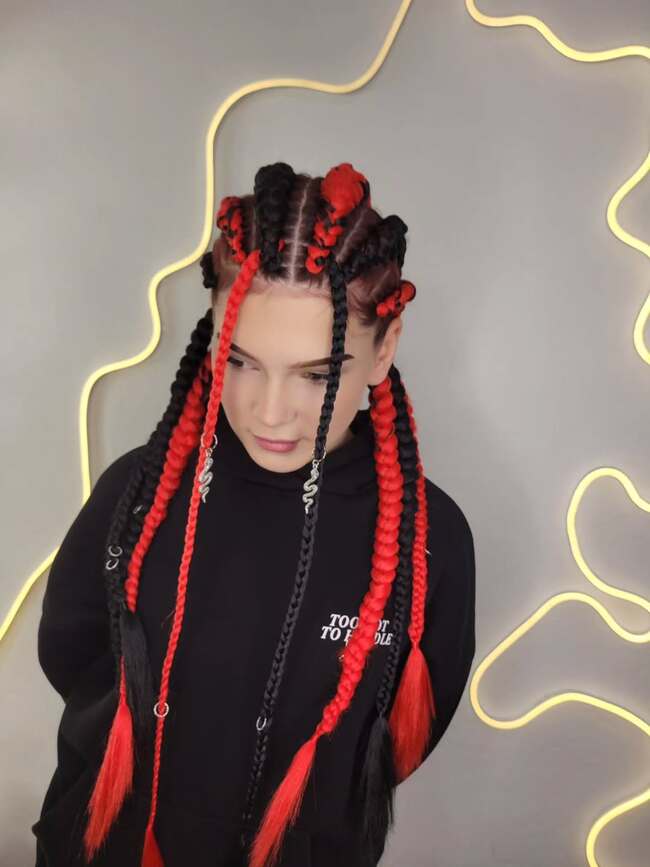
Braids with metal rings - metallic or plastic rings woven throughout the braiding process. Adds shine and edgy rock vibes.

@afrokosy_krasnodar
Ombre transitions - using two or three synthetic hair colors that blend seamlessly. Mimics professional hair coloring effects.

@liena_braid_studio
Beaded braids - for special occasions. Small pearls or crystals woven throughout or concentrated near the face.

@mary_nech_x
Neon variations - vibrant colors for those who love standing out. Pink, lime green, electric blue - no limits.

@zapletayka
Felt elements - trending on TikTok. Thin felt strips woven into braids create unique texture.

@anisha_braideressa
Who Should Consider Box Braids?
Box braids suit nearly everyone, but certain factors matter. Age, gender, face shape, and lifestyle all influence the best approach. Let's examine each category individually.
Women's Box Braids
Women experiment most frequently with box braids. Creative possibilities span from classic natural tones to bold rainbow combinations.

@ahmdibraid
Popular women's options:
- Waist-length braids for maximum drama
- Shoulder-length braids for versatility and convenience
- Color transitions from natural roots to bright ends
- Asymmetrical cuts with one side shorter
- Mixed thickness combining thin and thick braids
Face shape considerations matter. Round faces benefit from length that visually elongates. Angular faces soften with wavy elements or asymmetrical designs. Oval faces work with virtually any style.

@palubabraids
Women over 40 should approach color choices thoughtfully. Natural shades with subtle highlights often appear more elegant than neon options. That said, age shouldn't limit self-expression - confidence matters most.

@panda_braids
Men's Box Braids
Men increasingly embrace box braids but typically prefer more subdued approaches without bright colors.

@the_elementos
Popular men's styles:
- Top braids with shaved sides (top-knot style)
- Short braids covering the entire head (4-6 inches)
- Fade combinations blending braids into short cuts
- Natural colors - black, brown, blonde
- Minimal or no decorative elements
Male athletes particularly favor box braids. Football players, basketball players, and boxers often choose these styles for training convenience while maintaining fashionable appearance.

@pleti_menya
Corporate environments show mixed acceptance. Creative fields like design, music, and tech typically welcome box braids. Conservative industries may present challenges. Consider workplace dress codes before commitment.

@centralceetv
Children's Box Braids
Children can wear box braids, but special considerations apply. Young scalps are more sensitive, hair is finer, and patience runs shorter. The approach must be gentler.

@kosa_bataisk
Children's box braid considerations:
- Only hypoallergenic materials without chemical odors
- Looser tension to prevent headaches
- Fewer braids - 60-80 instead of 100+ for adults
- Check school policies regarding bright colors
- Shorter wear periods - maximum one month
Kids love vibrant options - rainbow transitions, glitter, colorful yarn. Balance fun with practicality. Extremely long braids may interfere with play and sports activities.

@chaykalena_stylist_spb
Many parents choose box braids for summer vacations. No daily brushing or styling required. Children can swim and play freely while maintaining neat appearance.

@braids_armavir
Box Braids for Short Hair
Short hair doesn't prevent box braids. Minimum length is 2 inches, though 3-4 inches works better. Synthetic hair or yarn enables dramatic transformations even from very short cuts.

@kosa.by
The secret lies in proper extension technique. Skilled braiders take tiny sections of natural hair and attach long synthetic pieces. Braiding begins near the root while extensions provide length.

@pipabu_braid
Short hair possibilities:
- Visual length extension to shoulders or beyond
- Volume addition for thin hair
- Color changes without chemical processing
- Texture creation on fine hair
Short hair installations last slightly less - about 6-8 weeks instead of 10-12. Limited natural hair means more stress on the scalp.

@kosa.by
Not all braiders excel with short hair. Specialized techniques and experience are crucial. Seek stylists with proven short-hair braiding portfolios.

@afro_elena
DIY Box Braiding: Step-by-Step Instructions
Self-braiding requires significant time investment but remains entirely achievable. Key elements include patience and proper technique. First attempts take 8-12 hours, but speed improves with practice.
Basic Box Braids Without Extensions
Start with the simplest approach. Minimal tools needed - rat-tail comb, small elastics, and hair clips.

Step-by-step process:
- Thoroughly wash and completely dry hair
- Apply styling mousse or gel for easier handling
- Section hair into 1-inch squares using rat-tail comb
- Secure completed sections with clips
- Begin at the nape - hardest area to reach
- Take one section and divide into three equal parts
- Braid tightly from root to tip
- Secure with small elastic matching hair color
- Move to next section
Average braid count ranges 100-150. Don't attempt completion in one session. Split into 2-3 sessions of 3-4 hours with rest breaks.
Beginner tips:
- Practice on mannequin heads or friends first
- Watch YouTube tutorials for visual guidance
- Avoid excessive tension - prevents headaches
- Maintain consistent part sizes for neat appearance
- Expect slow progress initially
Box Braids with Synthetic Hair
Working with synthetic hair involves more complexity but creates more dramatic results. Quality materials form the foundation of success.

Synthetic hair preparation:
- Unpack and detangle synthetic hair with wide-tooth comb
- Divide into sections - one pack yields 20-25 braids
- Fold each section in half for easier attachment
- Prepare warm water bowl for hand moistening
Braiding technique:
- Prepare natural hair as for basic braiding
- Take hair section and synthetic piece
- Place synthetic hair fold at natural hair root
- Divide everything into three parts - natural plus synthetic
- Braid firmly, maintaining consistent tension
- Continue with synthetic hair when natural hair ends
- Seal tips with lighter flame or secure with knots
Remember: synthetic hair can be slippery, especially when new. Periodically dampen hands for better grip. Some braiders add small amounts of hair gel directly to synthetic hair.
Box Braids with Yarn
Yarn provides the most budget-friendly option while being easier to handle than synthetic hair. No slipping issues and excellent shape retention.

Required materials:
- Acrylic knitting yarn (3-4mm thickness)
- Sharp scissors
- Lighter for sealing ends
- Ruler for consistent cutting
Braiding process:
- Cut yarn to desired length plus 6 inches extra
- Use 6-10 strands per braid
- Tie yarn securely at hair root
- Distribute hair and yarn into three equal groups
- Braid normally, evenly distributing yarn
- Continue with yarn only when natural hair ends
- Finish with double knot and flame seal
Yarn enables beautiful color gradients. Use two yarn colors distributed along braid length - darker at roots, lighter at ends.
Box Braid Maintenance and Care
Initial days with box braids feel challenging. Head feels heavy, sleeping takes adjustment, constant urge to touch the new style. This is completely normal - your body adapts to changes.

@lamartabraids
First week guidelines:
- Mild discomfort possible - take pain relievers if needed
- Avoid water contact for 2-3 days post-installation
- Sleep on back or side with soft pillows
- Minimize unnecessary touching
- Wear hats carefully to prevent snagging
Washing routine: Wash less frequently than usual - 1-2 times weekly suffices. Use clarifying shampoo diluted 1:1 with water. Apply only to scalp using gentle motions without rubbing.
Rinse thoroughly - shampoo residue causes itching. After washing, gently pat with towels without wringing. Air dry or use blow dryer on cool setting.
@mary_braids_kiev
Recommended care products:
- Thermal water spray for scalp hydration
- Light oils (jojoba, argan) for root nourishment
- Dry shampoo between washes for freshness
- Anti-static spray to reduce frizz
- Specialized box braid products from professional suppliers
Prohibited practices:
- Brushing braids with regular brushes
- Using conditioners or masks - makes braids slippery
- Sleeping with wet hair - creates unpleasant odors
- Pulling braids into tight styles
- Tugging or twisting individual braids
Box Braid Lifespan
Classic box braids last 4-6 weeks, synthetic hair versions up to 12 weeks. Duration depends on installation quality and natural hair growth rate. Monitor root condition - when new growth exceeds half an inch, removal time approaches.
Removal indicators:
- Braids appear fuzzy at roots
- Itching or discomfort develops
- Style loses neat appearance
- Feeling heaviness or tension
Self-removal is possible but professional removal is safer. Process takes 2-4 hours depending on braid quantity. Post-removal, apply deep conditioning treatments and allow hair rest for at least four weeks before re-braiding.
