Men's Crop Haircut — Types and Simple Styling Options 2026

✂️ Crop Haircut — The Essentials in 2 Minutes
- What it is: The sweet spot between a buzz cut and an undercut. Ultra-short sides (usually with a fade) plus textured, voluminous top.
- Who it suits: Looks sharp on oval and square faces. Masks high foreheads and receding hairlines thanks to the fringe.
- Hair type: Works on everything. Adds visual thickness to thin hair, tames coarse locks, perfect for curly hair.
- Popular versions: Textured (choppy effect), French crop (super short fringe), and crop with pronounced fade.
- Styling: 2-3 minutes tops. Just matte clay or powder. Gel with a wet look — absolutely off-limits.
Crop — the solution for guys who want minimal effort in the morning and maximum style throughout the day.
If a buzz cut feels too sporty and an undercut has lost its appeal — crop hits that perfect middle ground. Remember Thomas Shelby from "Peaky Blinders" and the rugged Daryl from "The Walking Dead"? That's when crop first exploded across social media. Today it's worn by international footballers and athletes, while barbers' Instagram feeds overflow with before/after transformations.
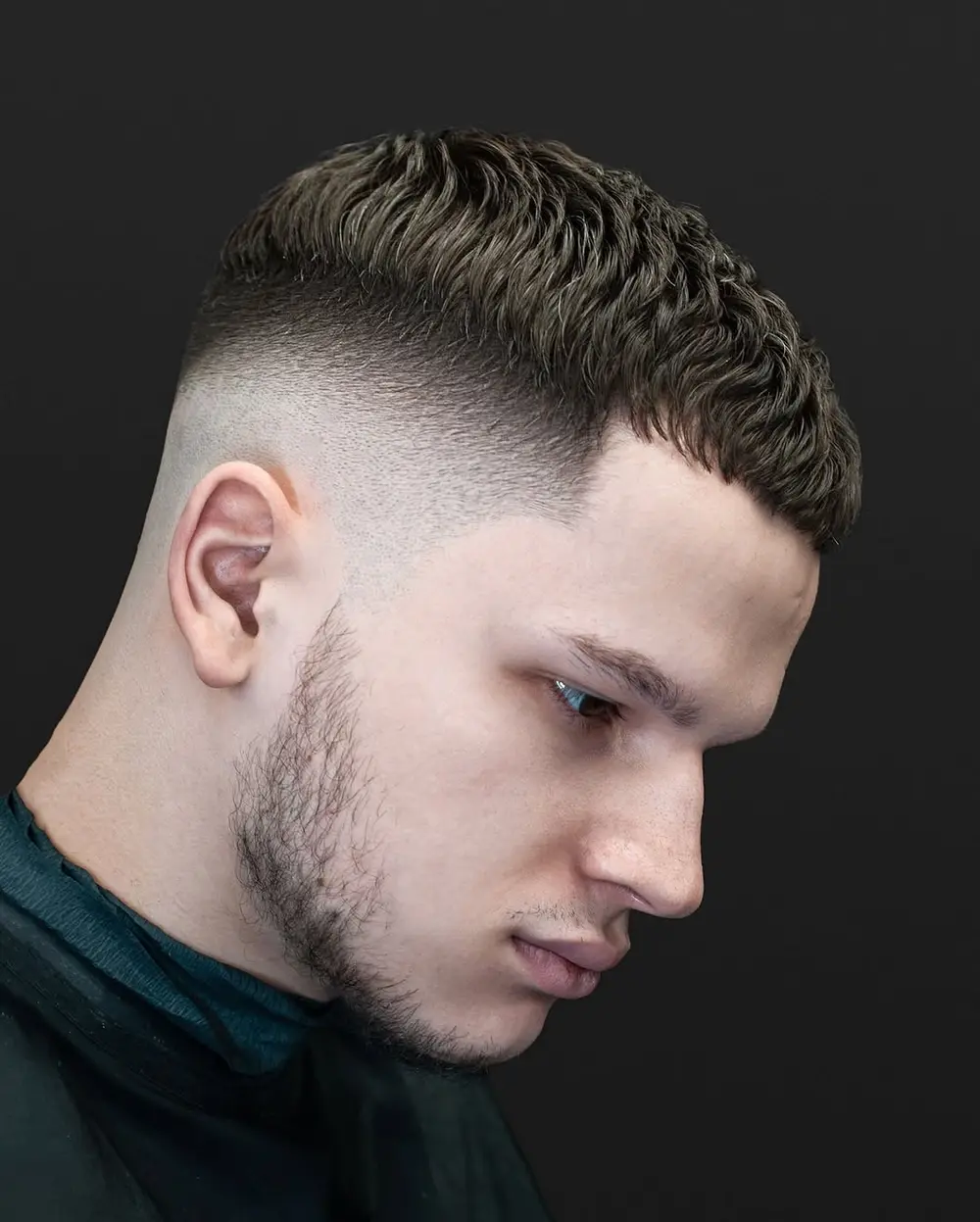
@vadim_shifrin_barber
In this guide we break down everything: from the anatomy of the cut to styling secrets, from variations to face shape recommendations. Bonus — technical details for barbers just starting out.
What is a Crop? Anatomy of the Cut
The men's crop haircut — it's a style built on contrast: maximum short perimeter (temples and nape) versus textured, voluminous crown. The name comes from "cropped," meaning trimmed at the edges, shortened. Historically, crop emerged as an alternative to classic men's cuts — no excessive length, no constant need to slick hair back.
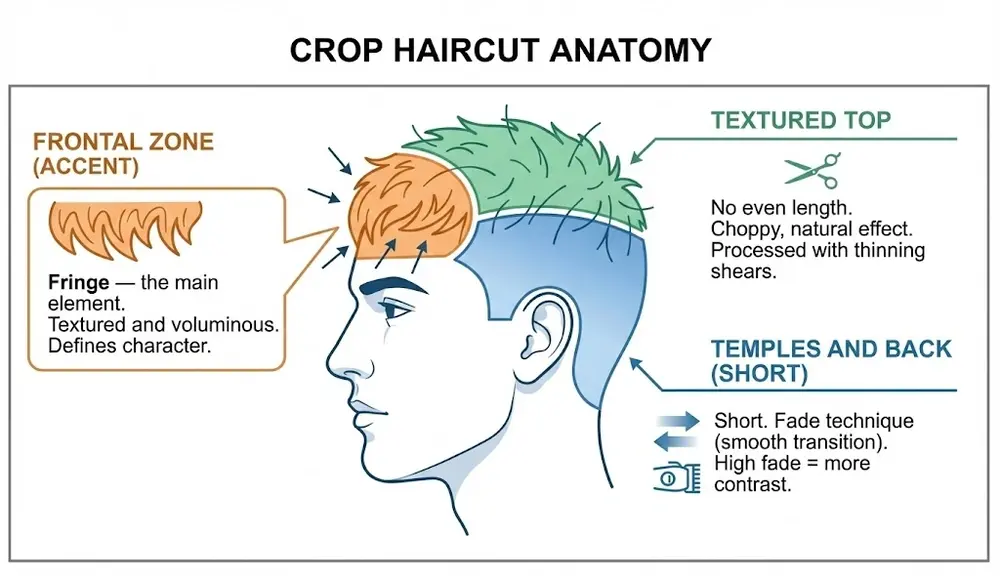
Three key elements that define the crop:
Focus on the frontal zone. The fringe — that's the main feature. It can be short or long, but always textured and full of volume. It sets the character for the entire cut.
Short sides and back. Sides are clipper-cut, often using the fade technique (smooth gradient from long to short). The higher the fade, the more contrast with the top.
Textured crown. No uniform length "under the comb." Hair on top gets worked with thinning, creating that choppy, natural effect. That's what separates crop from a classic short men's cut.
Crop Variations: Which One to Choose?
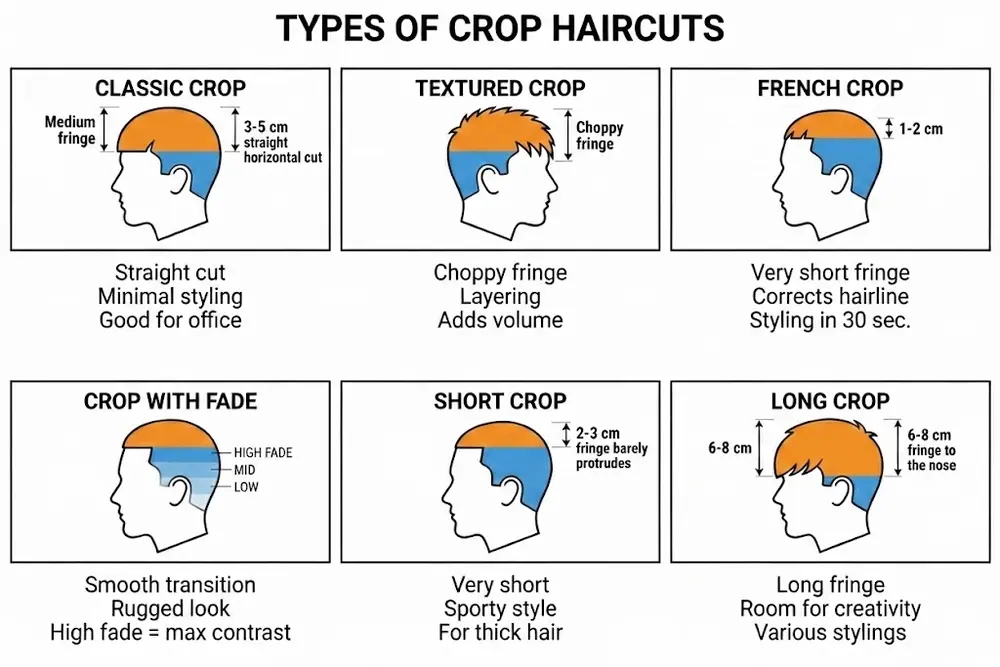
At first glance, crop — one haircut with a fringe and short sides. But the devil's in the details. Top length, fringe cutting technique, fade height — all this creates completely different looks. We break down six main variants so you can walk into the barbershop with a clear vision of what you want.
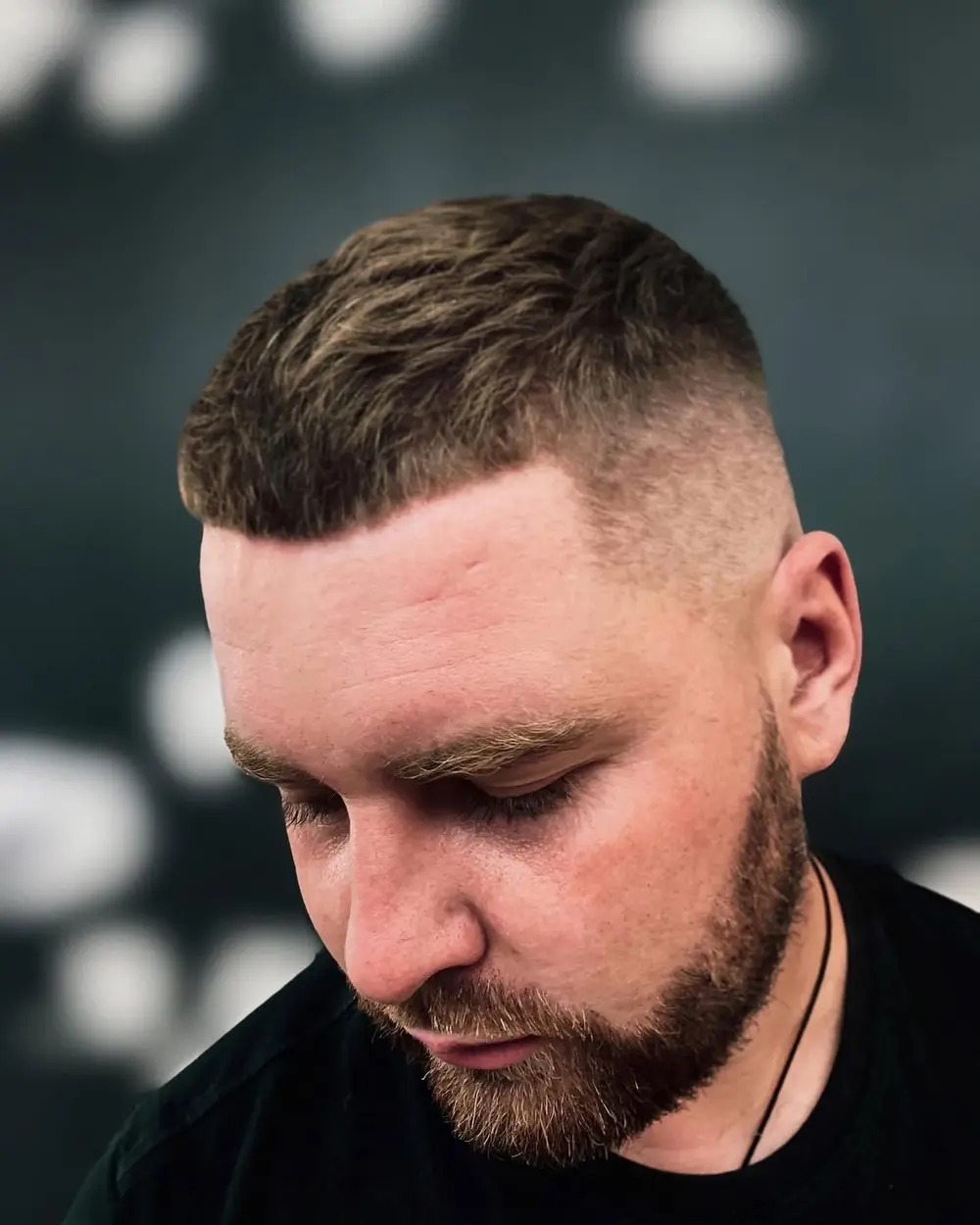
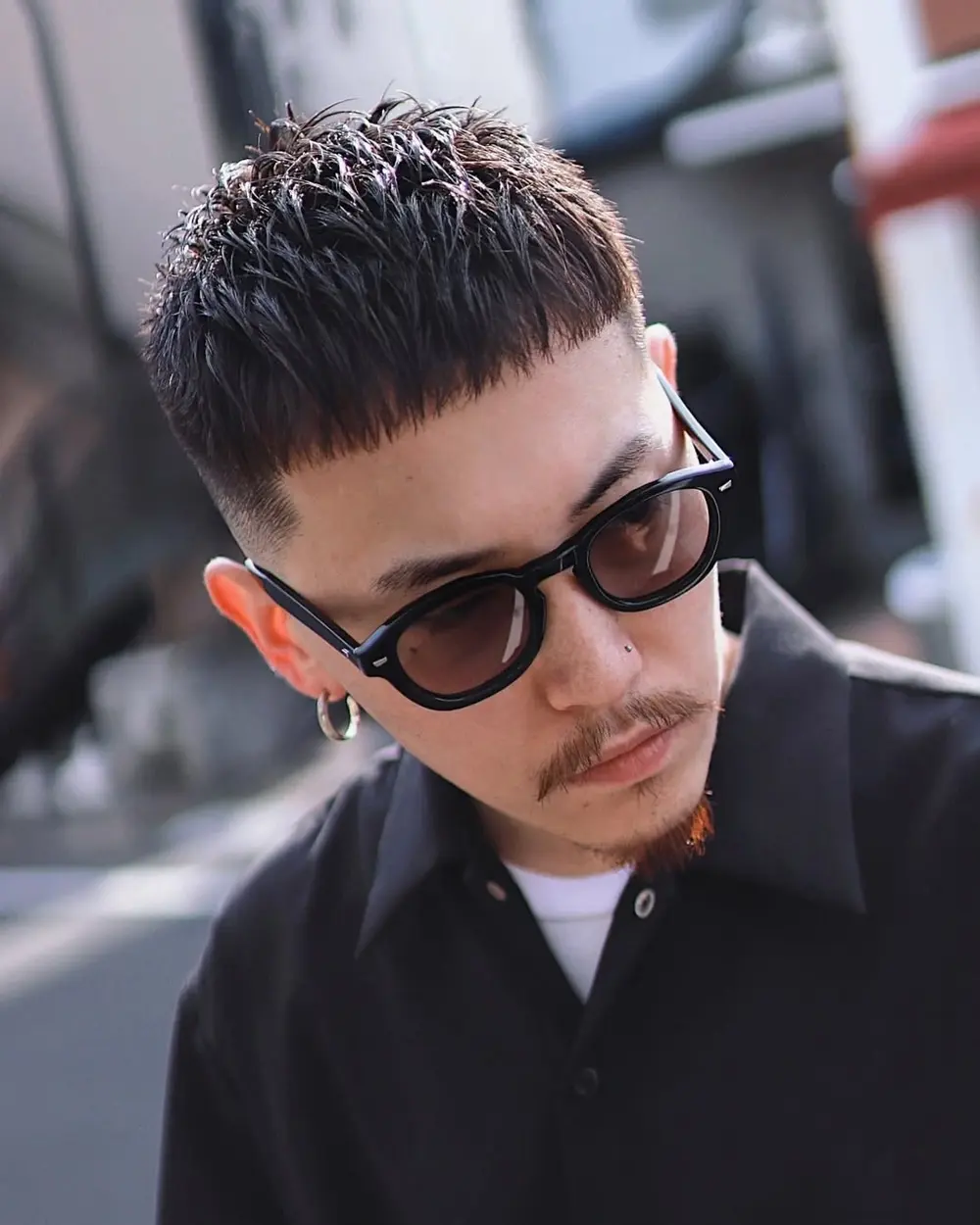
Classic Crop
The base version — medium-length fringe (3-5 cm), clean horizontal cut in front, sides and back clipped. Fits office dress codes and first-time experimenters. Minimal styling, maximum simplicity.
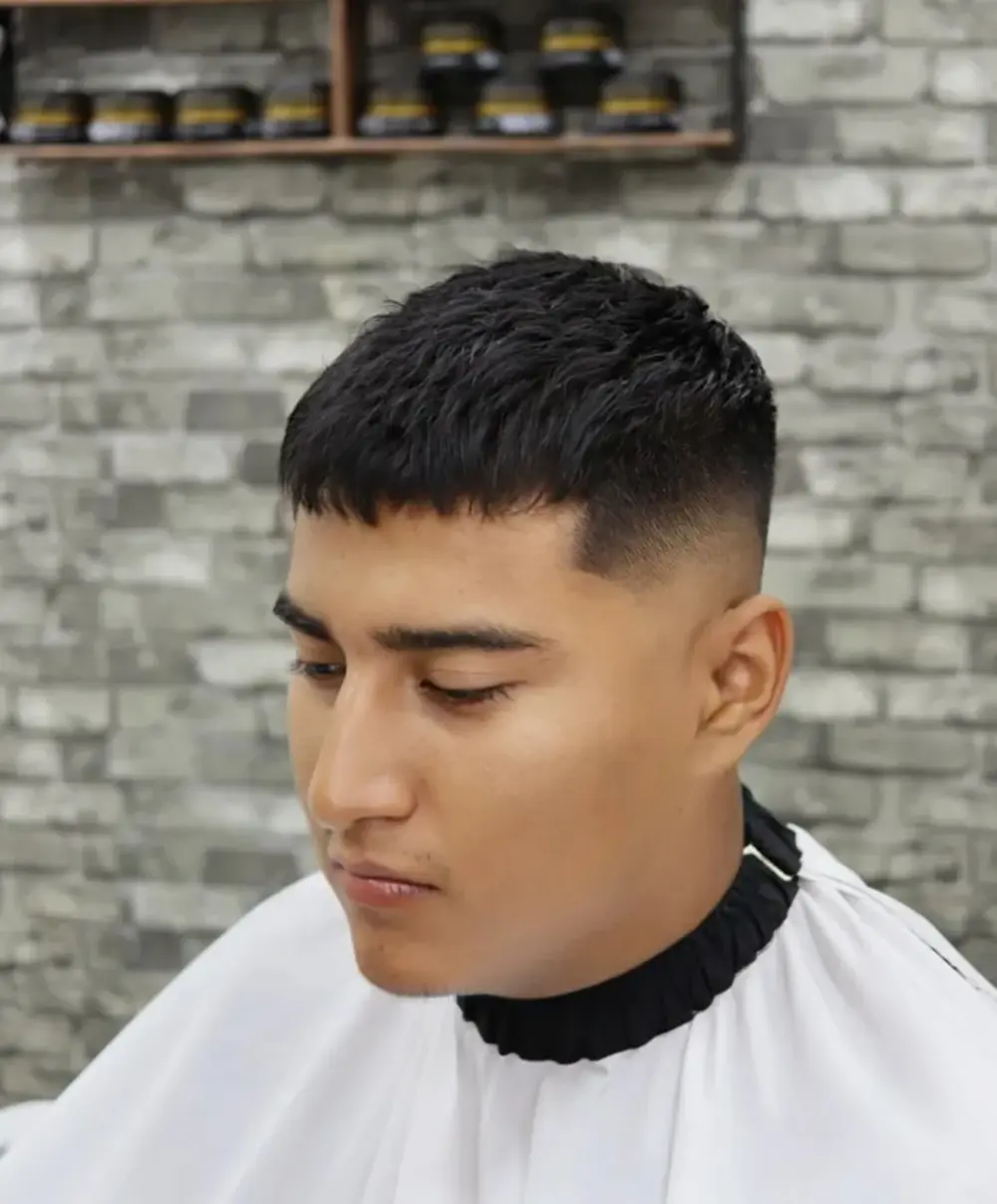
@barberfelix.ctz
@grinya44
@glock_keita_kurihara
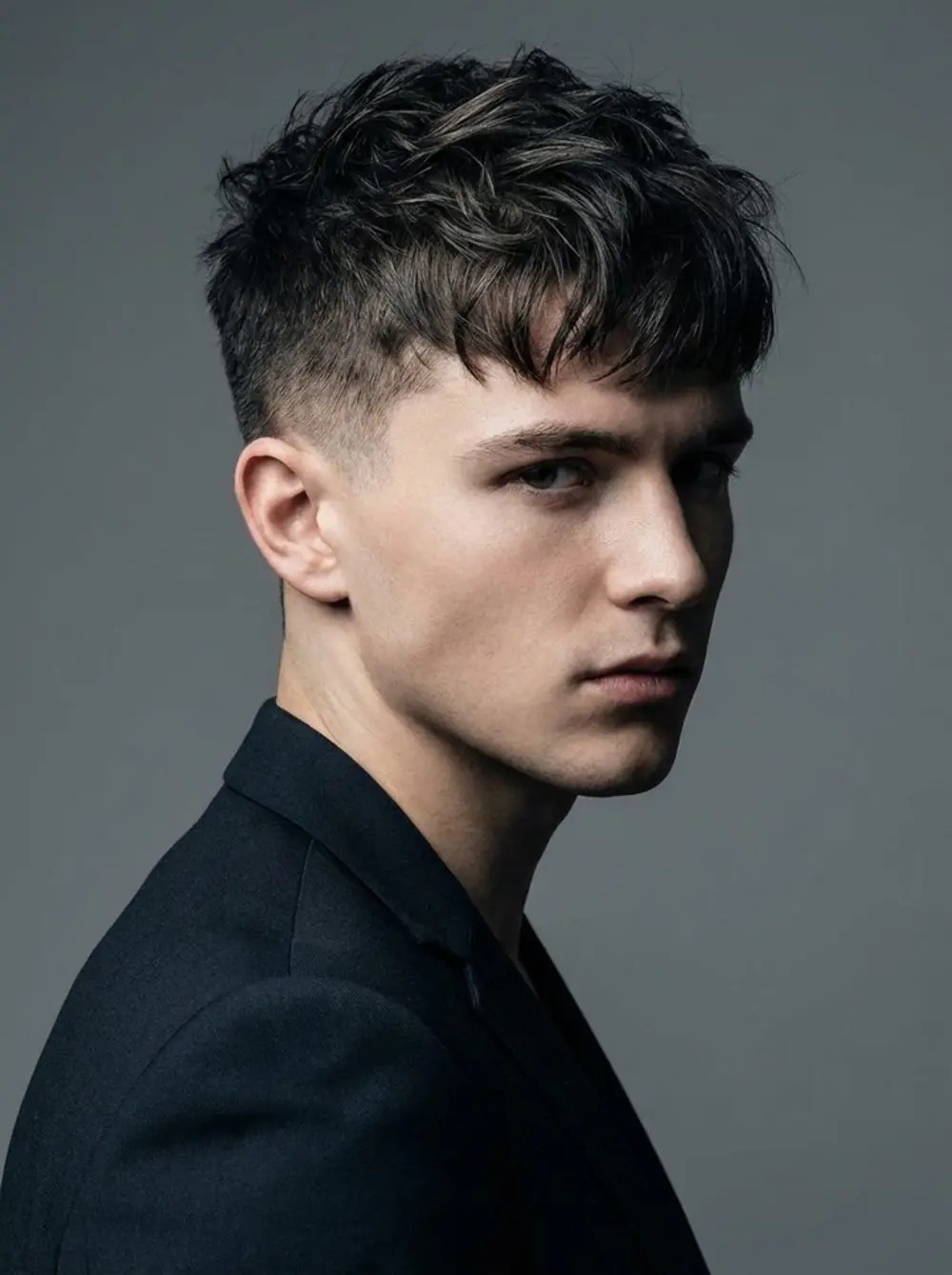
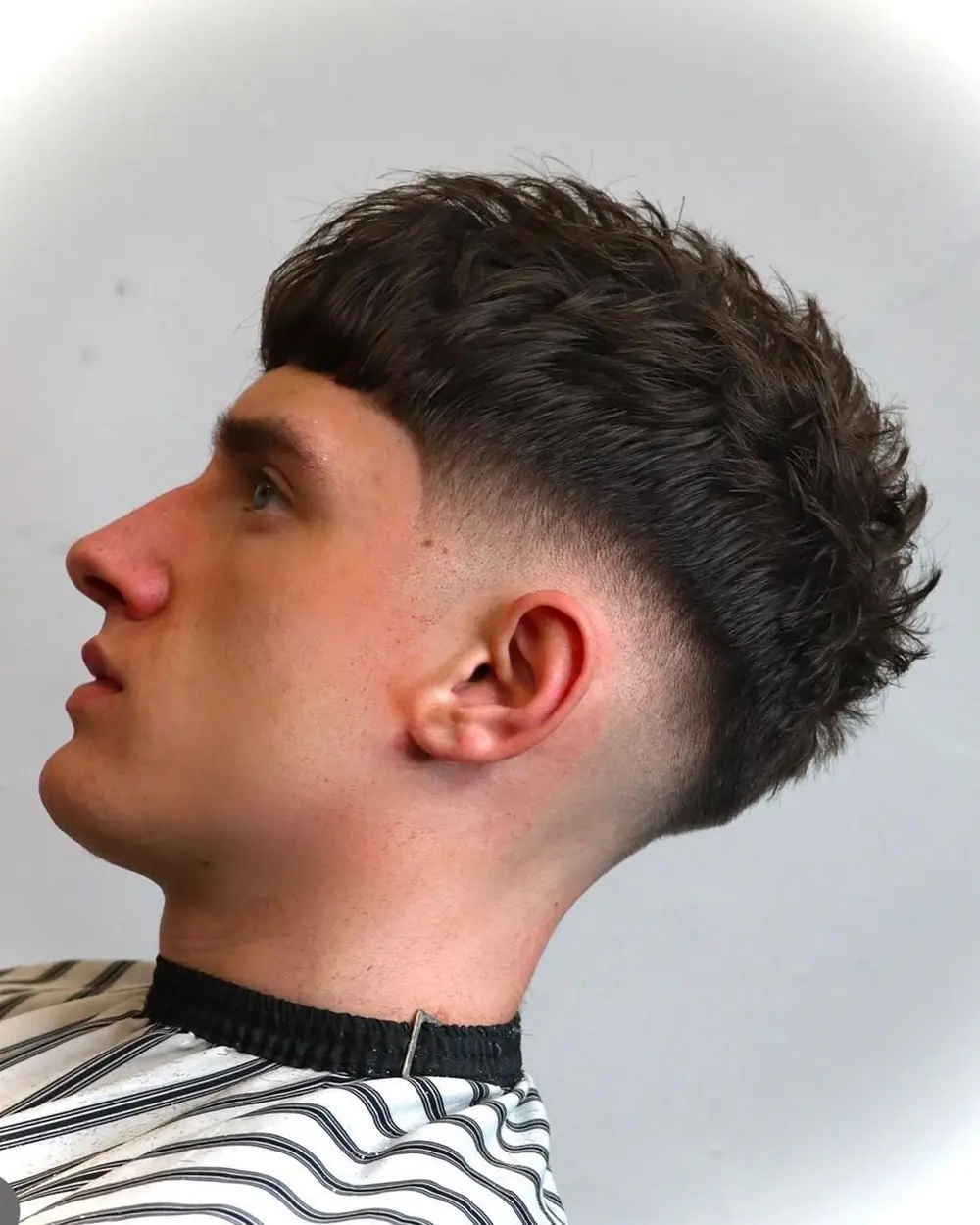
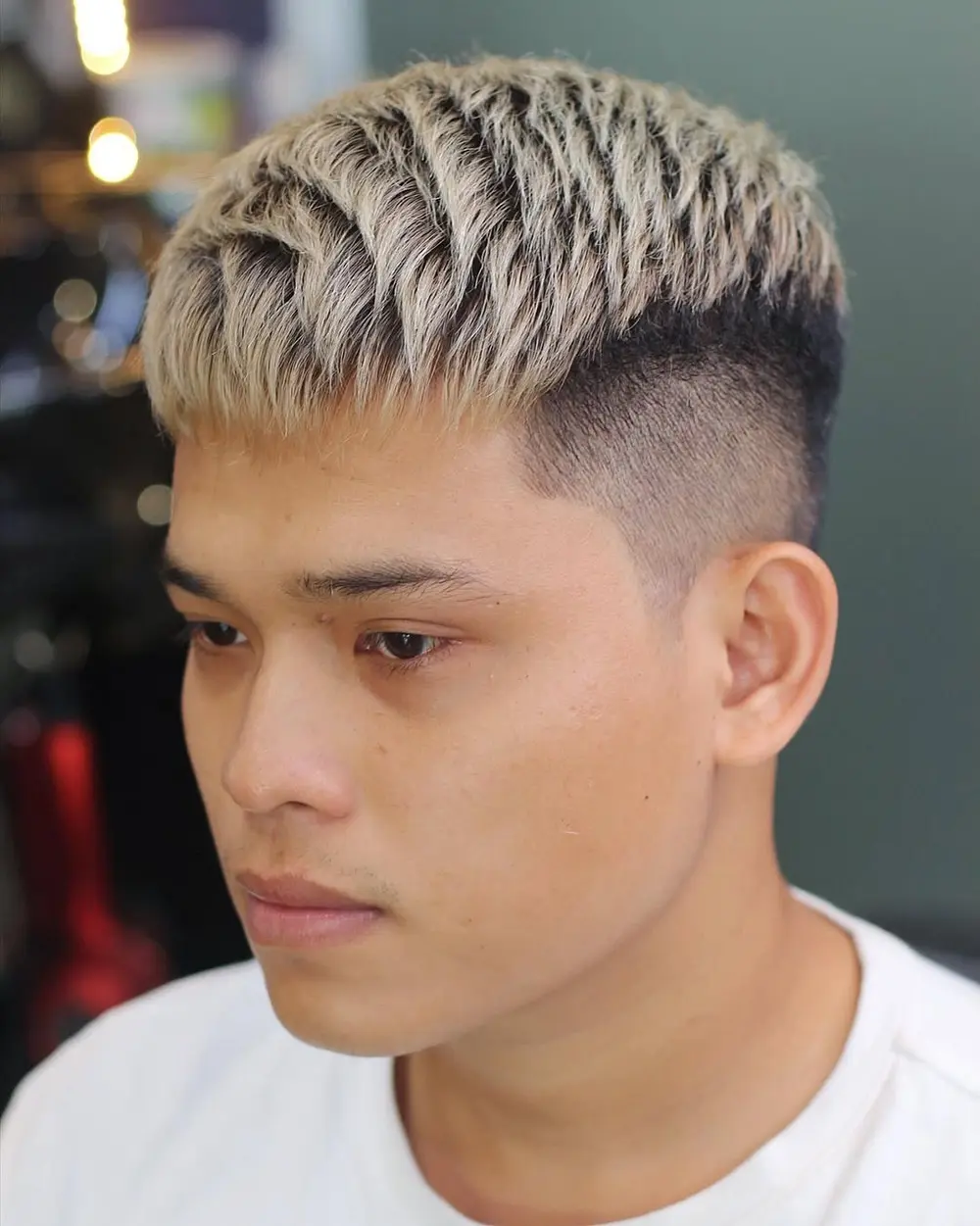
Textured Crop
The trendy take on the most popular men's cut. Top gets worked with point cutting (the "teeth" technique), creating pronounced layering. Fringe isn't even — it's choppy, which adds volume even to thin hair. Requires a bit more attention when styling, but the result pays off.
@hairflow.app
@modernbarbermag
@hmbarberhouse
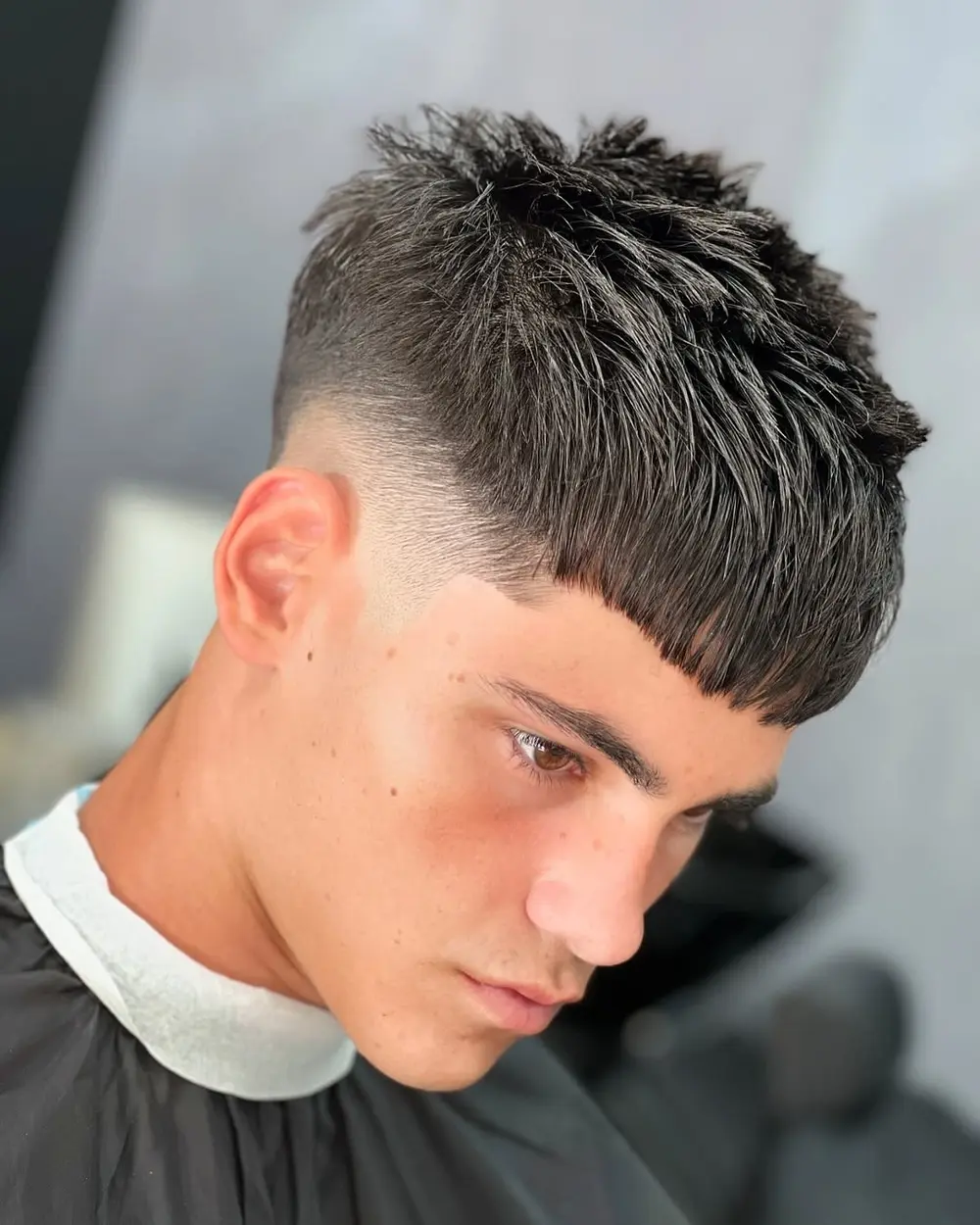
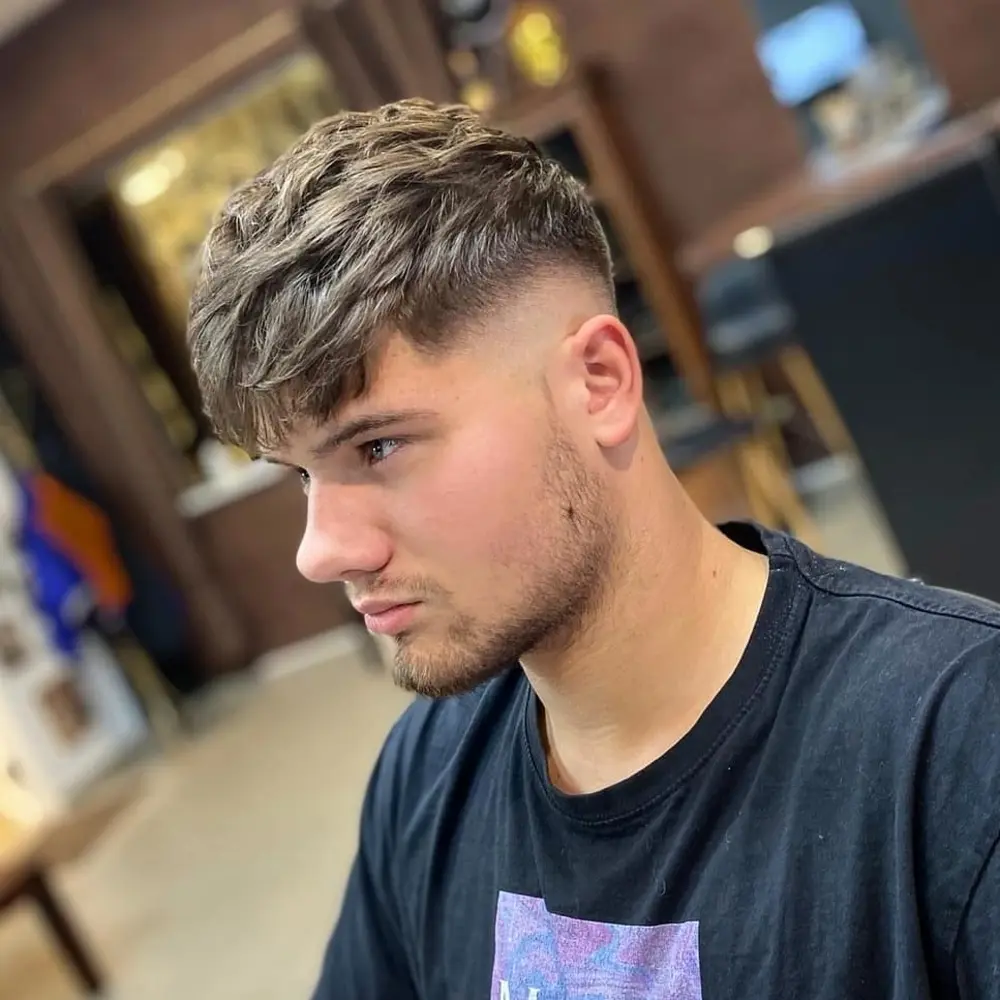
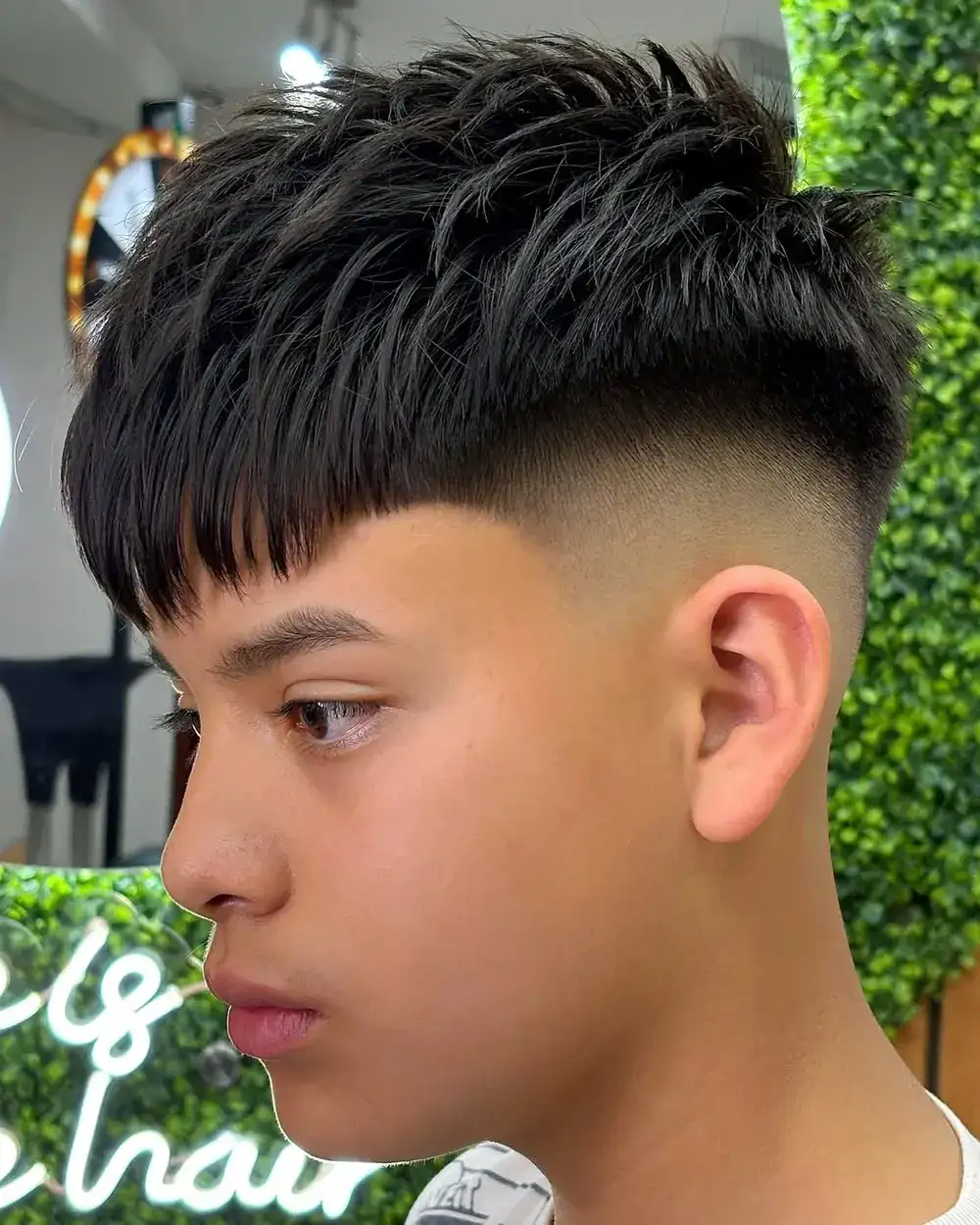
French Crop
The French version goes with maximum short fringe — often just 1-2 cm. French crop suits men with high foreheads or early signs of balding, visually correcting the hairline. Obvious plus — styling in 30 seconds.
@iurialexcuts
@vintagebarber_poprad
@beffo_barber
Crop with Fade
The crop haircut looks more rugged when you add a fade. Can be low (low fade — transition starts at the ears), medium (mid fade), or high (high fade — transition almost at temple level). High fade creates maximum contrast and demands frequent barber visits.
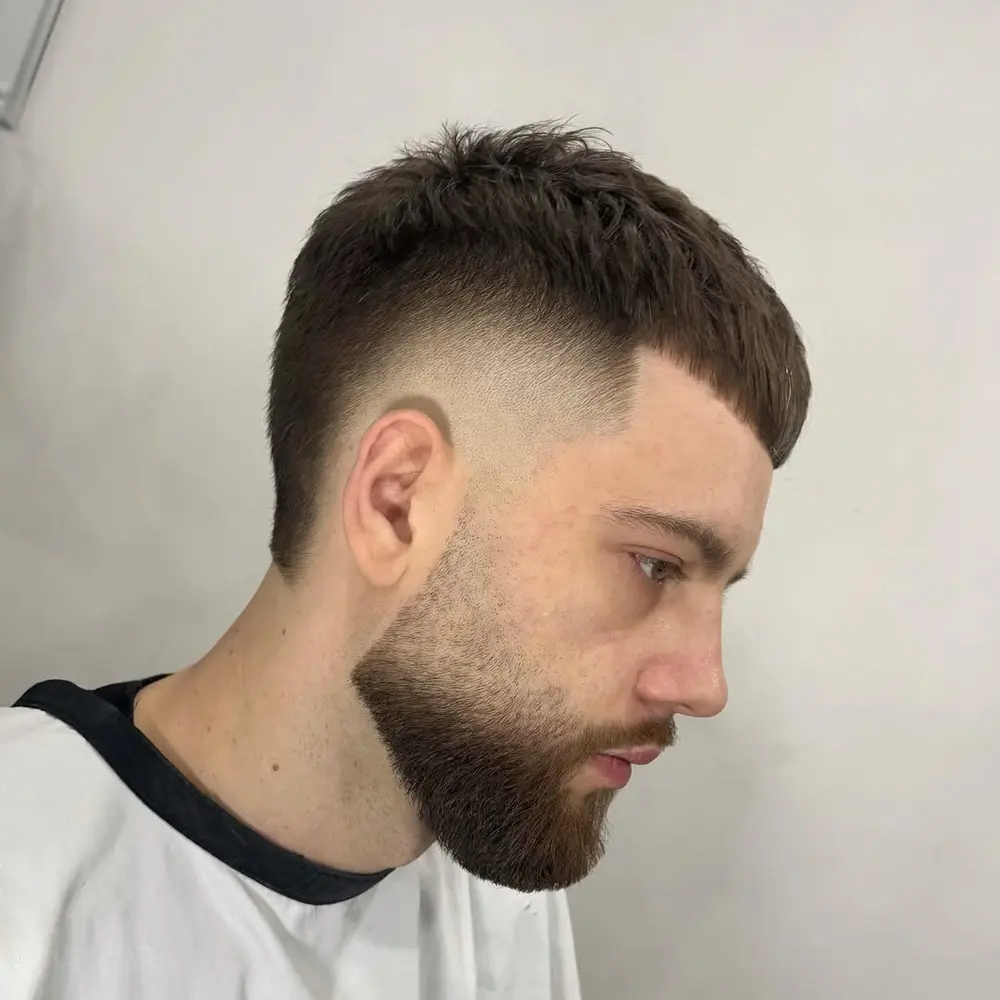
@jurij.jarmaszewicz
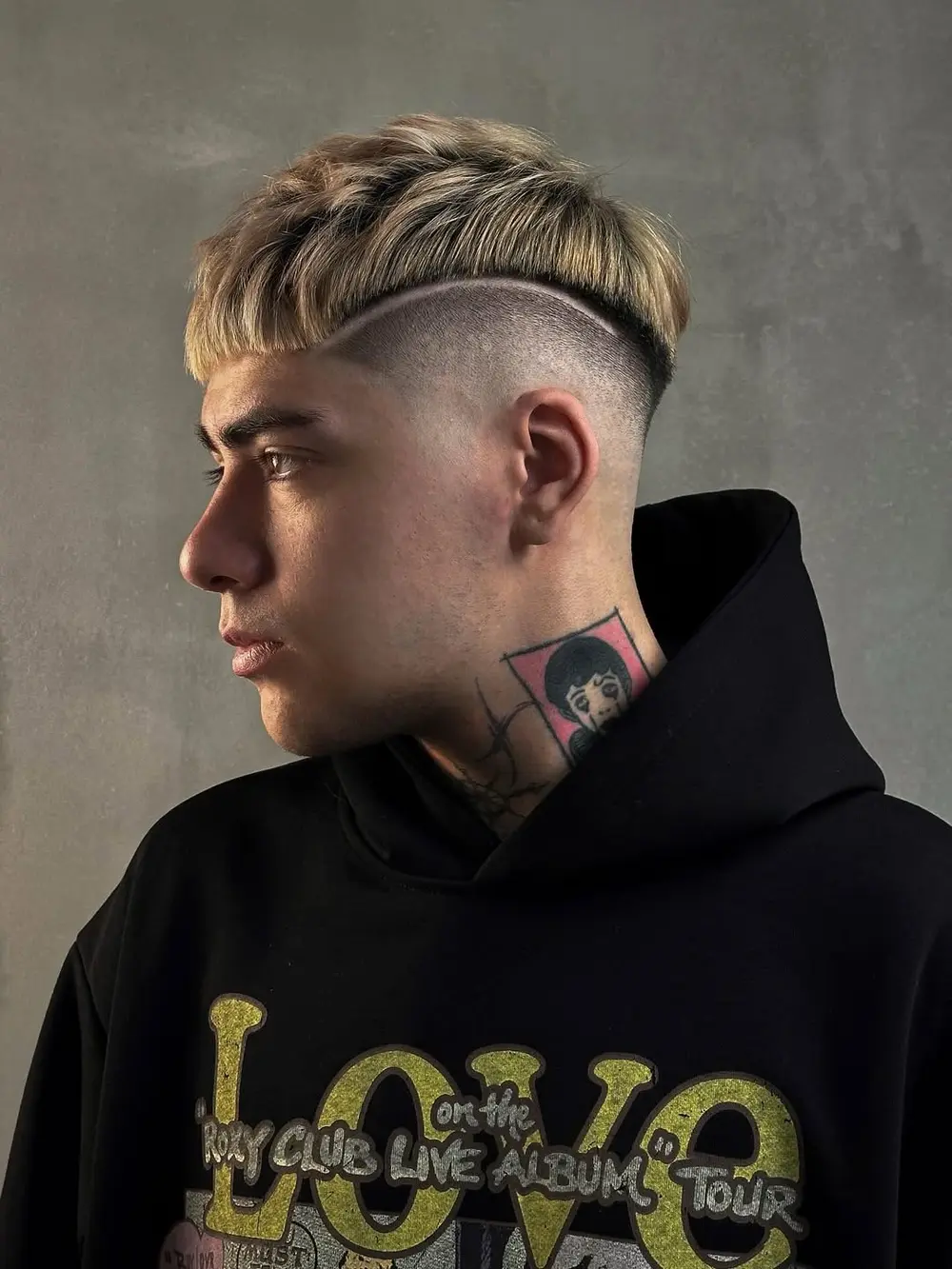
@osman.karaev
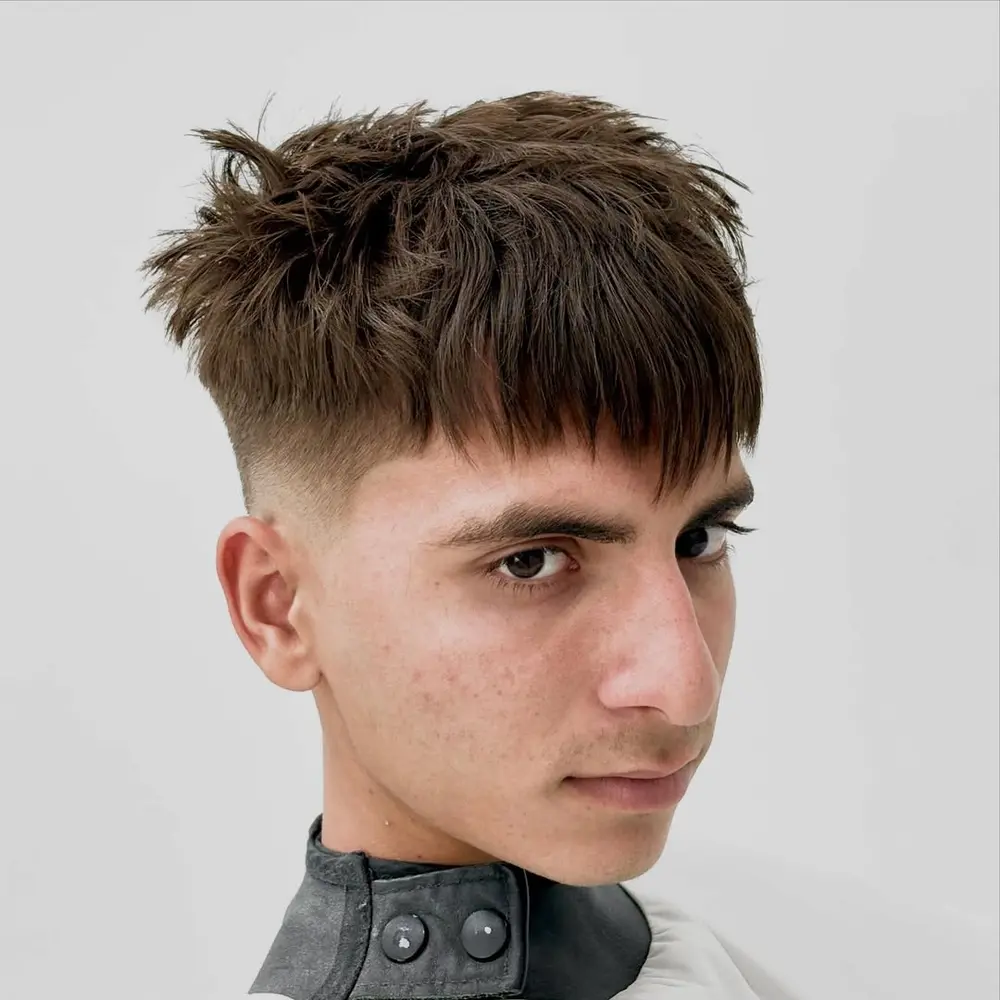
@mortezaa.ghanbarii
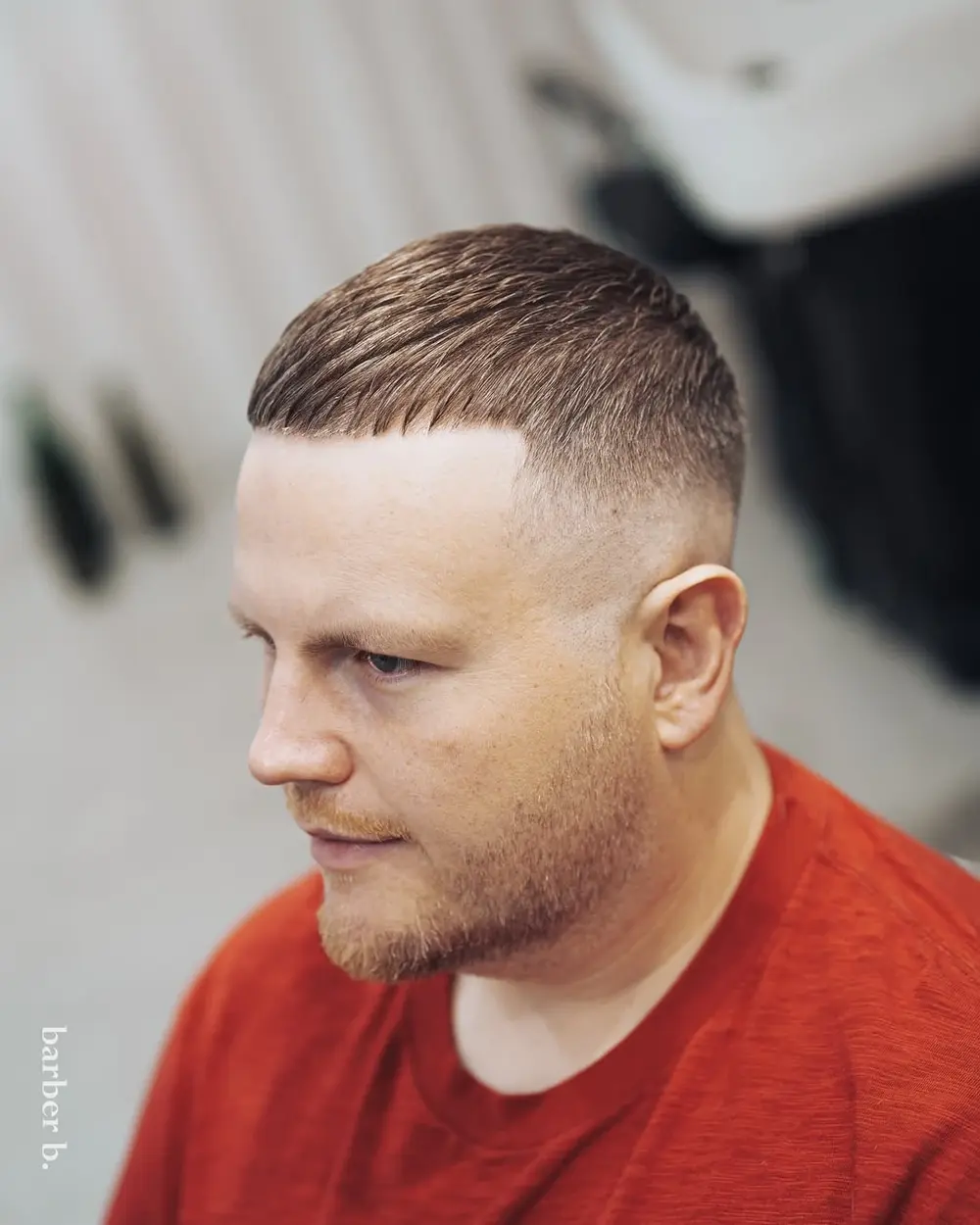
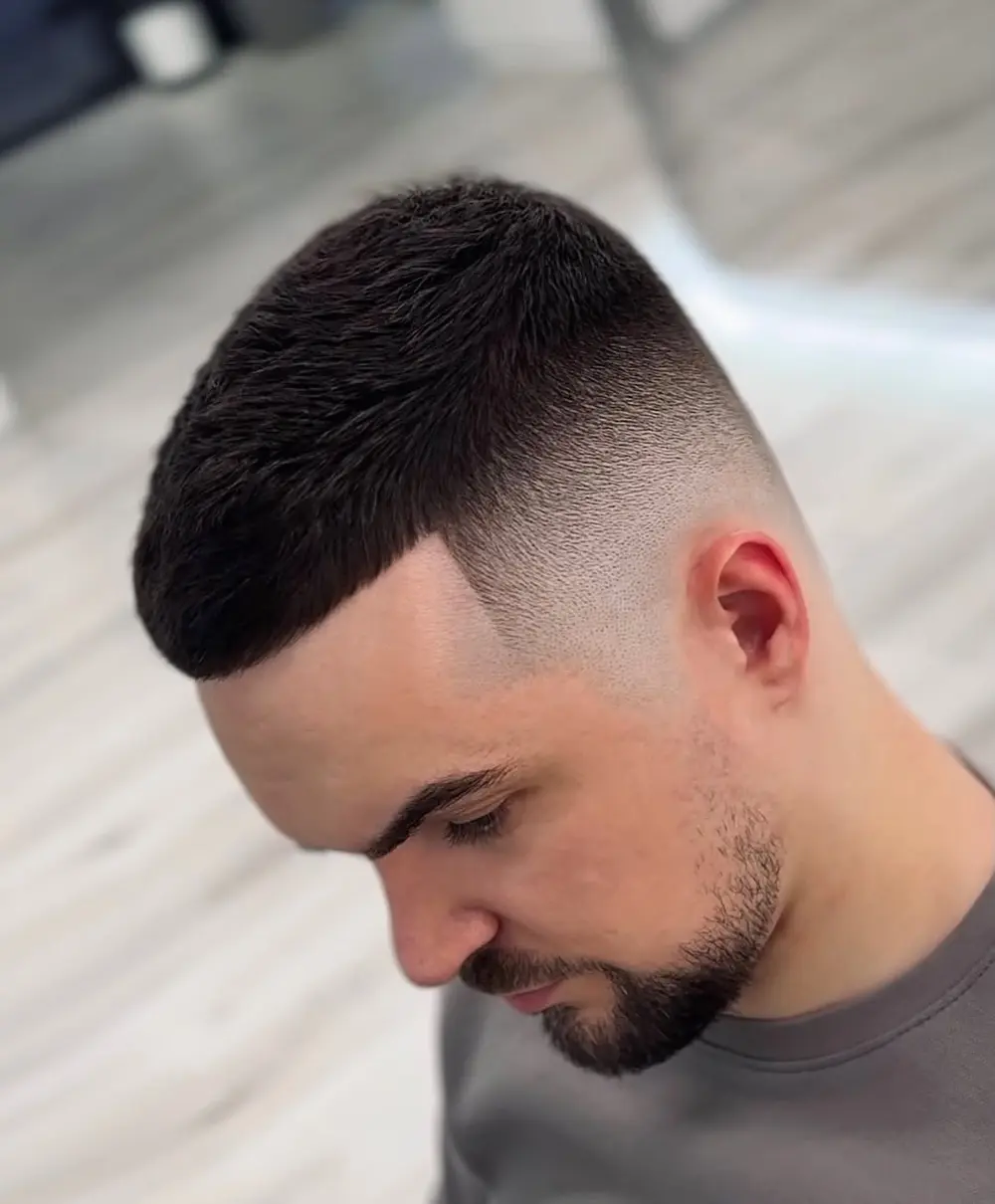
Short Crop
Top length — 2-3 cm, fringe barely sticks out. Summer variant or the choice for guys used to sporty cuts but wanting a touch more style. Uncomplicated short crop works perfectly for thick, coarse hair.
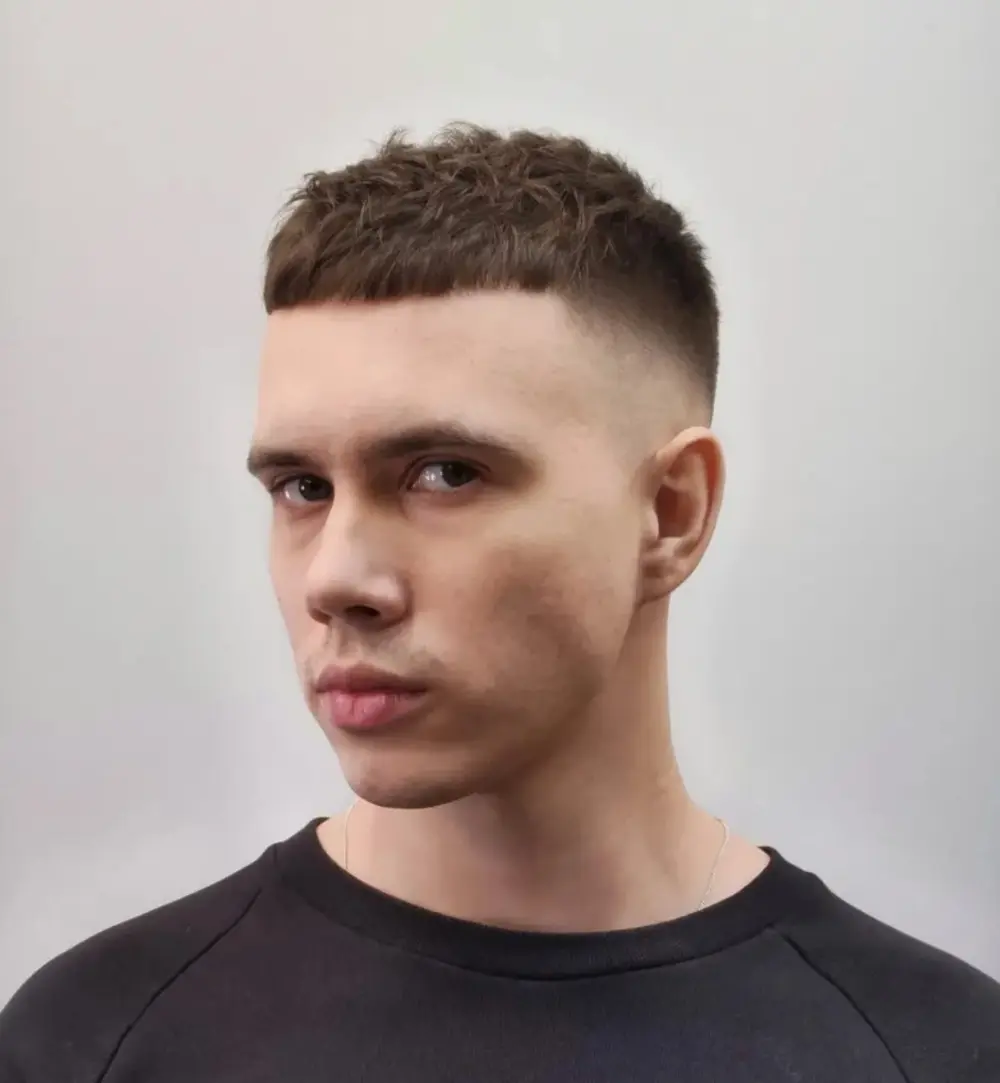
@9line_zero
@barber.b.take
@vbodnarr
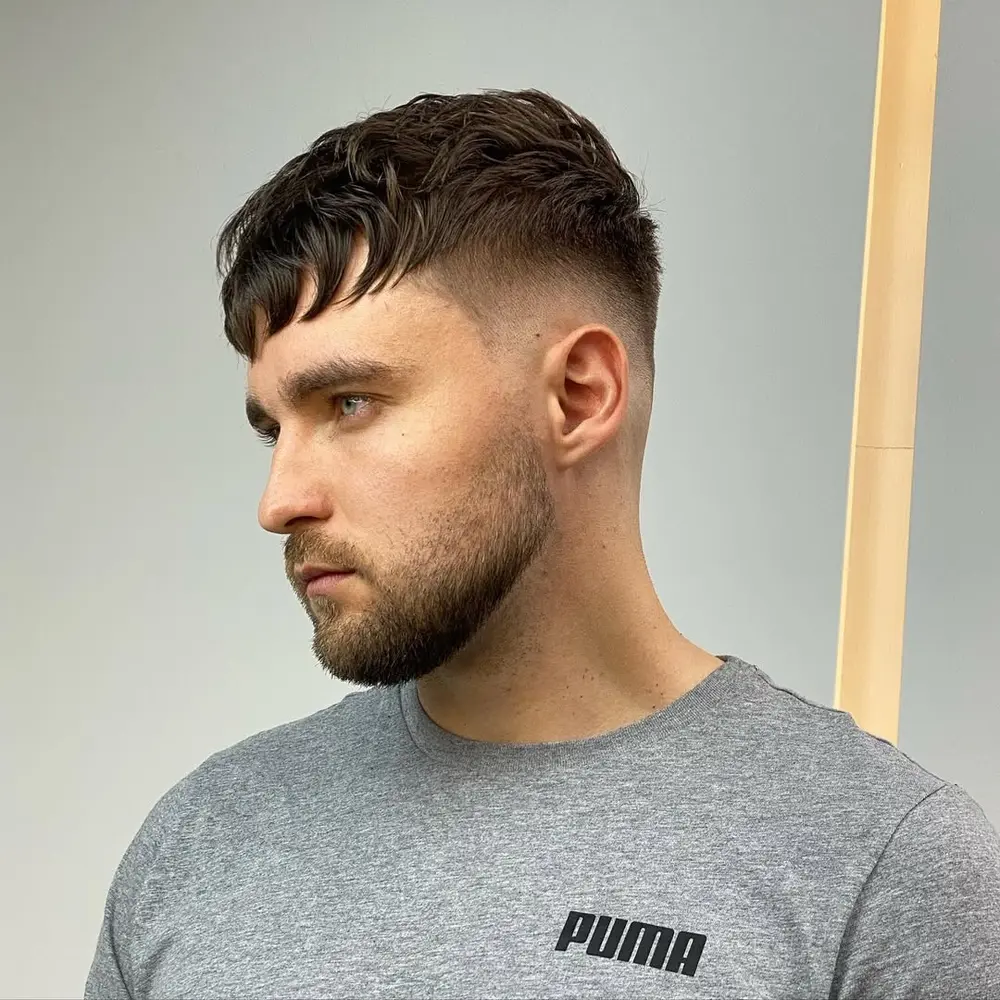
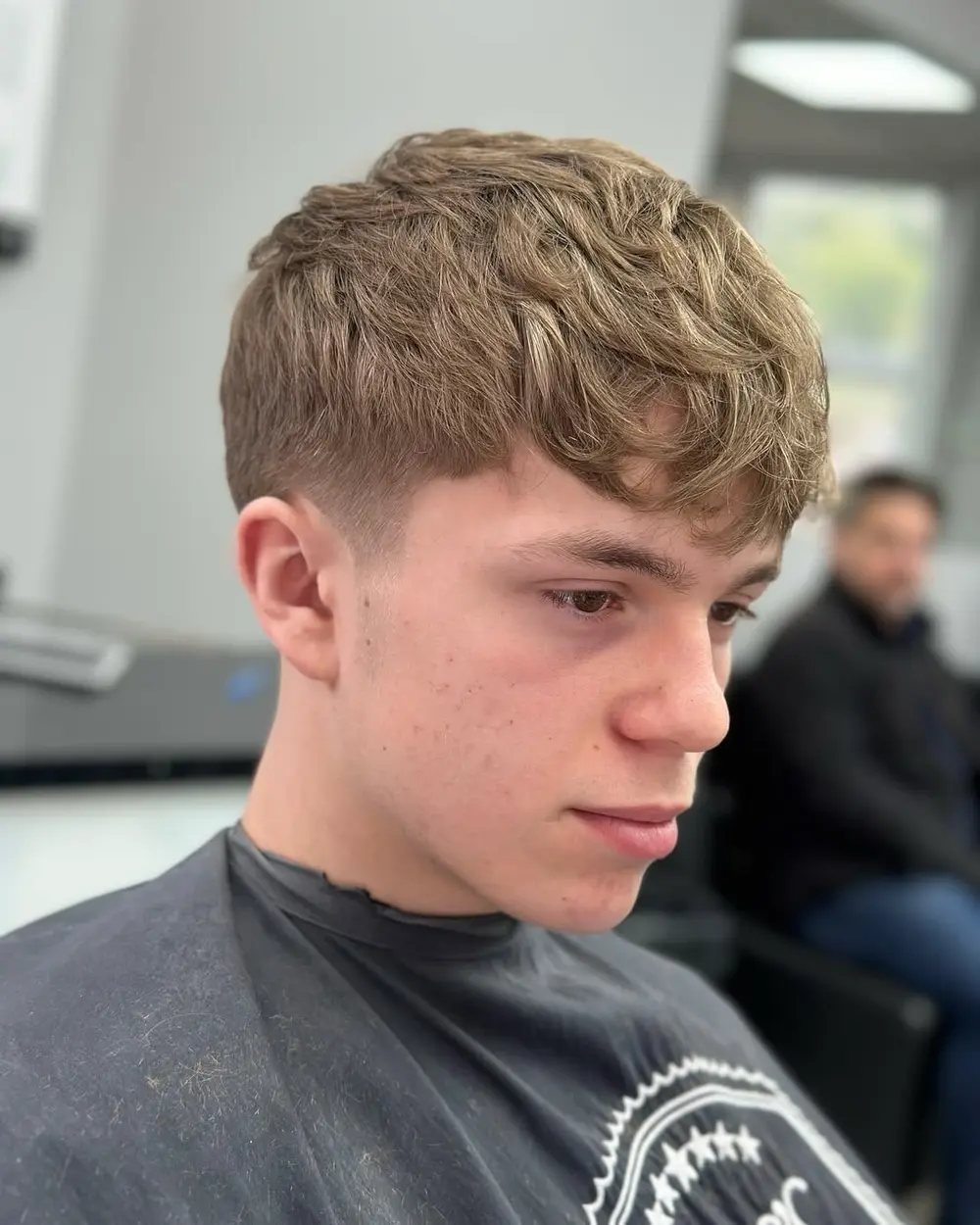
Long Crop
Top stays 6-8 cm, fringe can reach the nose. This length lets you experiment with styling — long crop can be swept to the side, back, or left in "artistic disarray." Requires more product work but gives room for creativity.
@dima.shkyria
@cbkenley
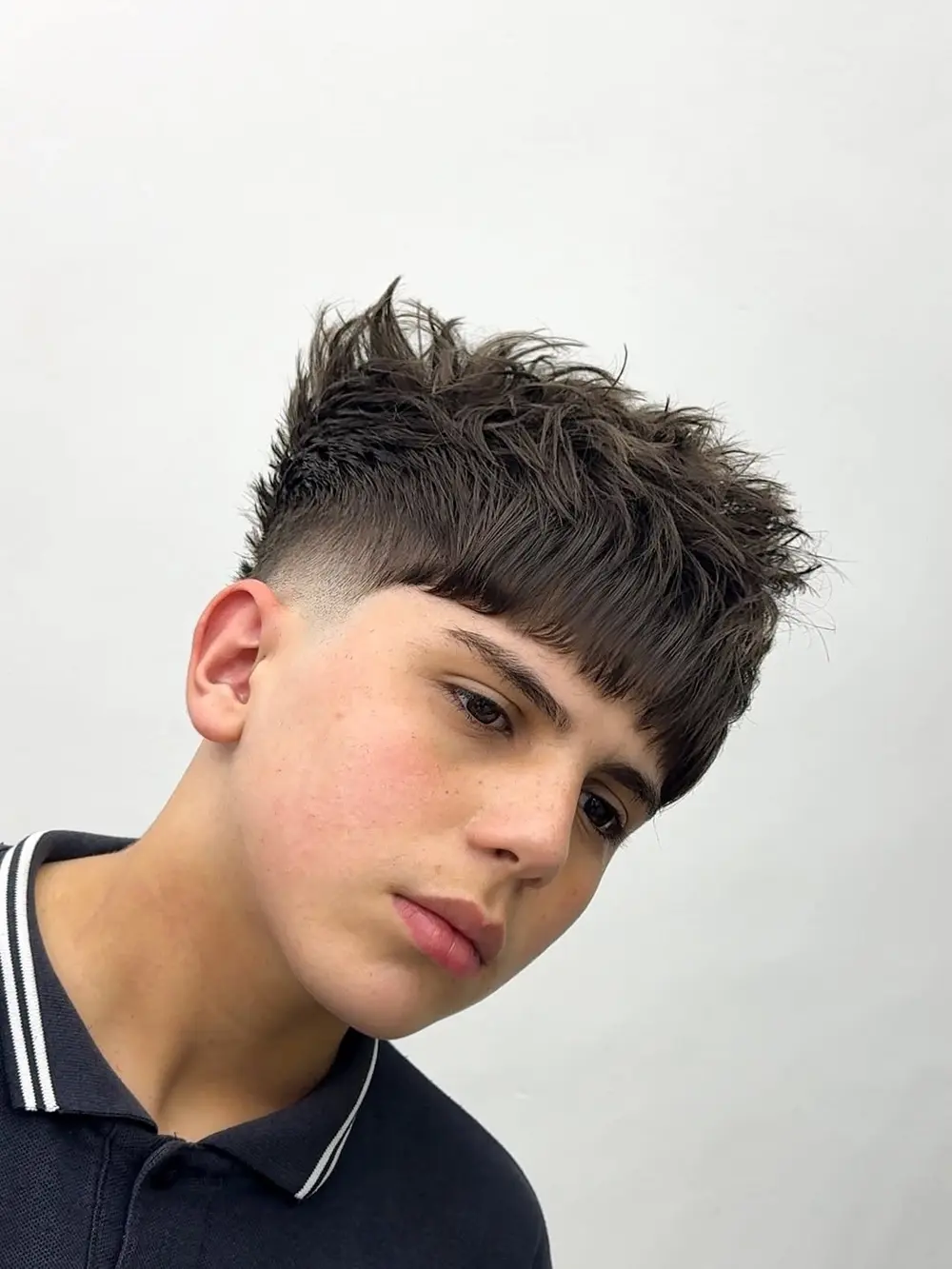
@enzo_m3
Who Does Crop Suit? Guide by Face Shape and Hair Type
A haircut can look incredible in photos but disastrous — on your head. Or the opposite — rescue your appearance by properly correcting proportions. Crop — one of the most versatile men's cuts, but even it has limitations. Before booking that barbershop appointment, identify your face shape and hair structure. This helps choose the right crop variant and avoid disappointment.
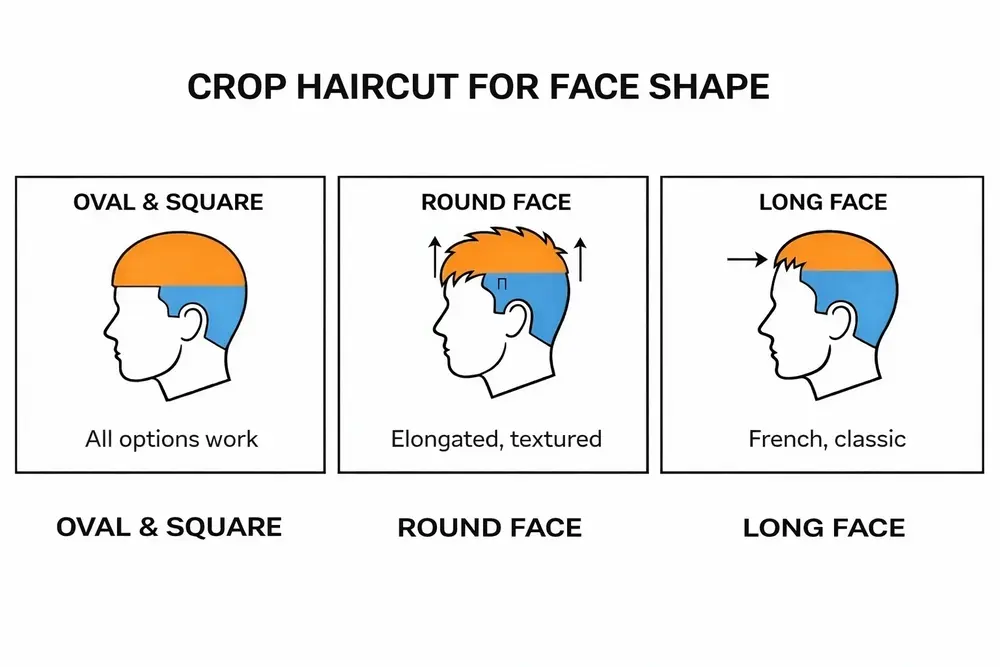
By Face Shape
Oval and square. Perfect match. Crop emphasizes a defined jawline, visually adds masculinity. You can pick any variation without restrictions.
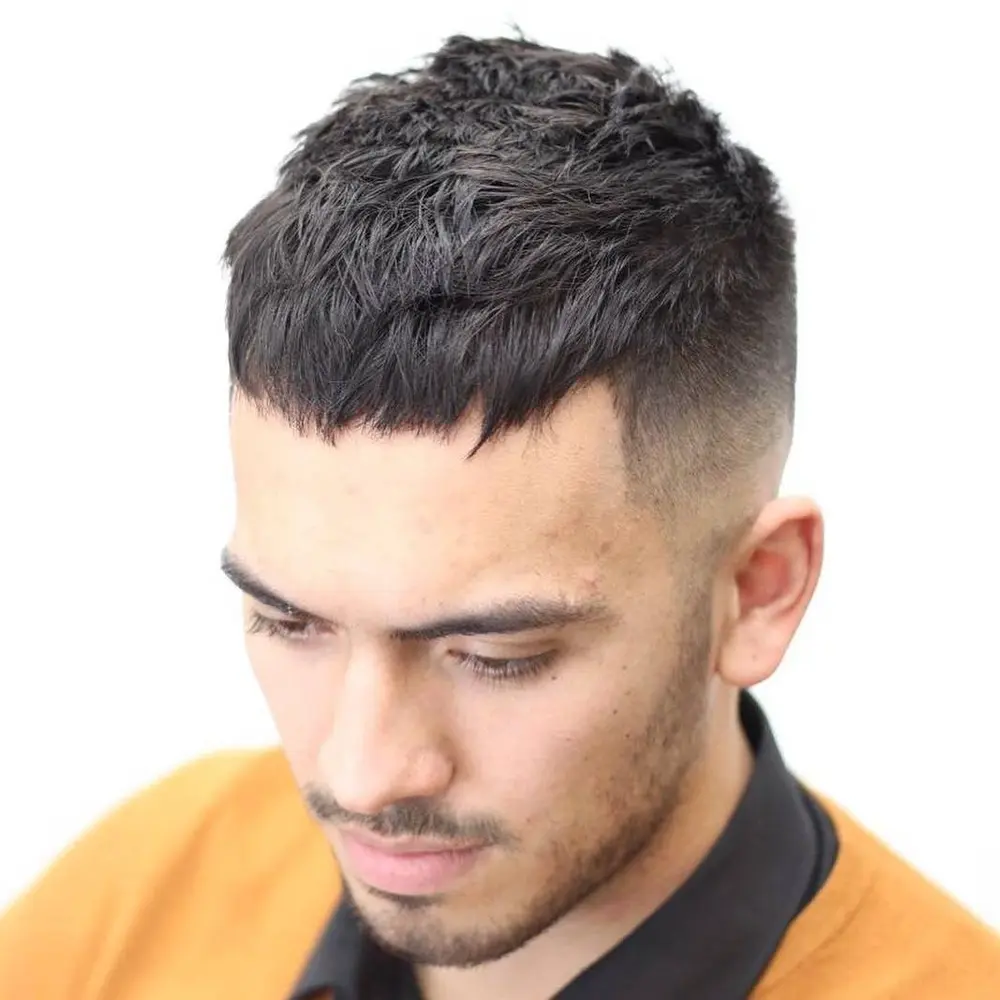
@truebarberproducts
Round face. Need height on top. Go for textured crop with longer crown — visually elongates proportions. Avoid too-short fringe, which makes the face appear even rounder.
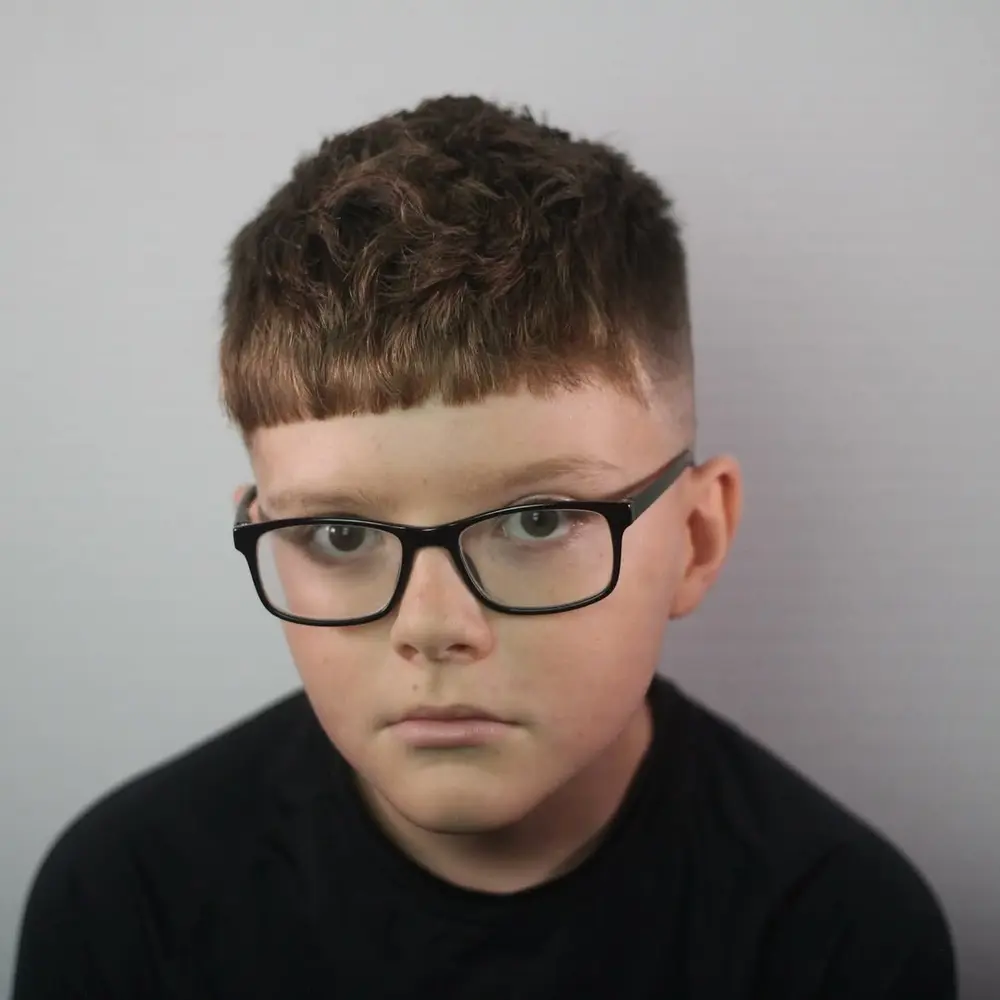
@jd_barberamaws10
Long face. Crop — your salvation. The horizontal fringe line visually shortens a high forehead and balances proportions. Choose French crop or classic variant with straight cut.
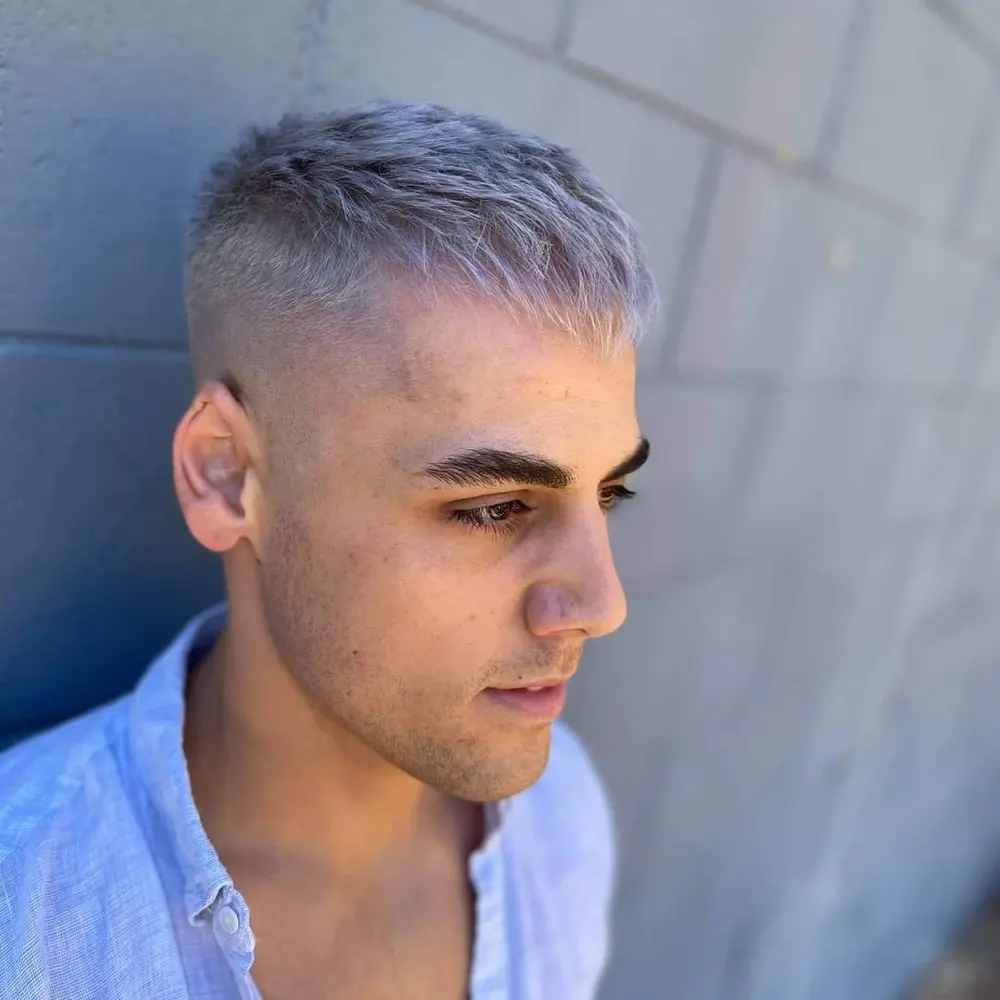
@connorcutandcolour
By Hair Type
Thin hair. Texture — your best friend. Choppy textured crop creates the illusion of thickness. Important point for men 30+, when hair starts thinning — proper texturizing adds visual volume.
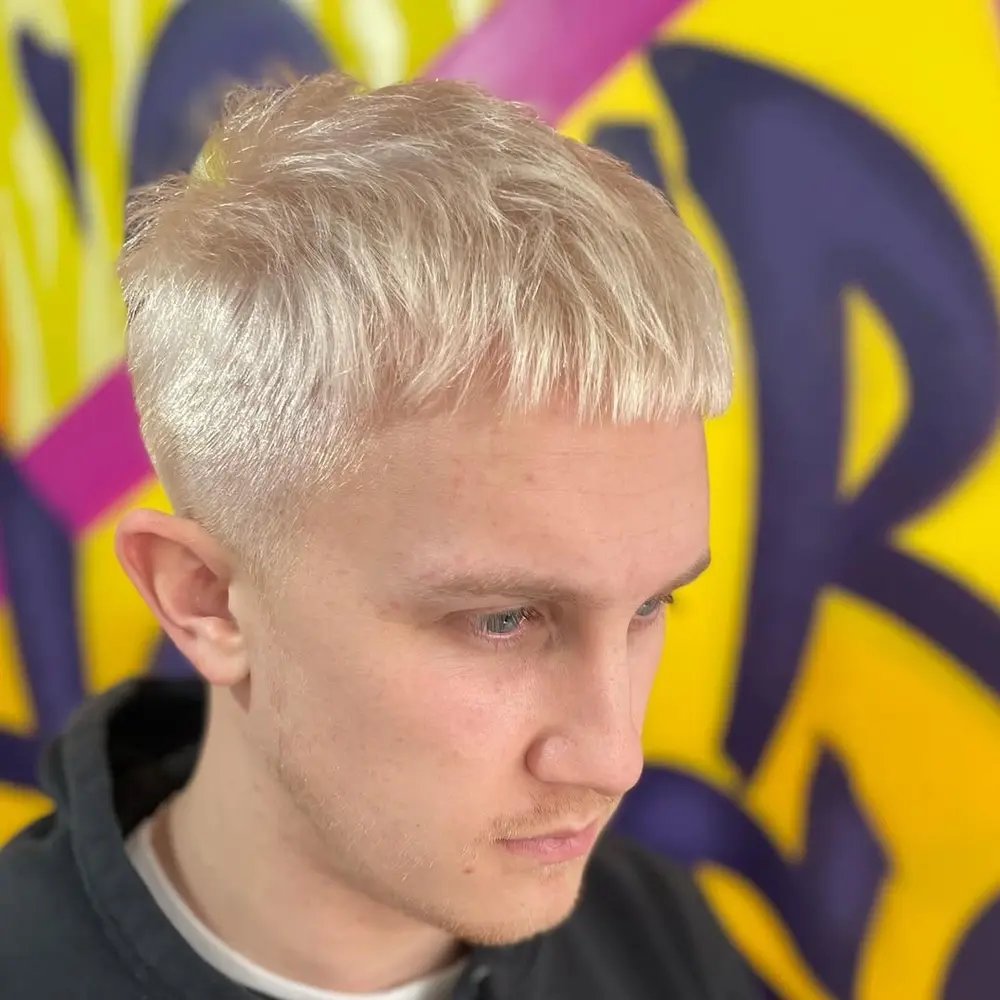
@ourhouse.hair
Thick and coarse hair. Crop tames unruly hair thanks to the short length. Use matte clay for hold — keeps shape all day without the "helmet" effect.
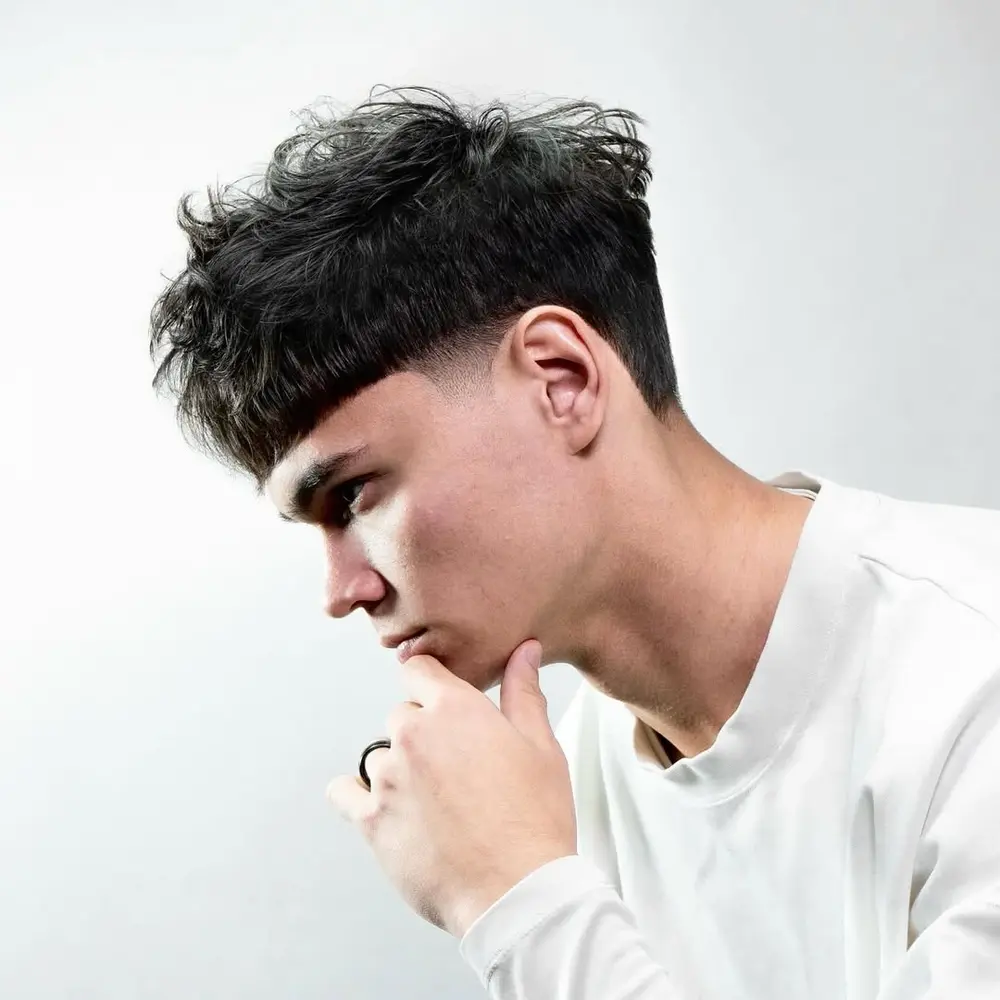
@oleg.hasami
Curly hair. Curly men's cuts — separate trend. Natural curl texture works brilliantly with the crop concept. Main thing — don't go too short on top, or curls start sticking out everywhere.
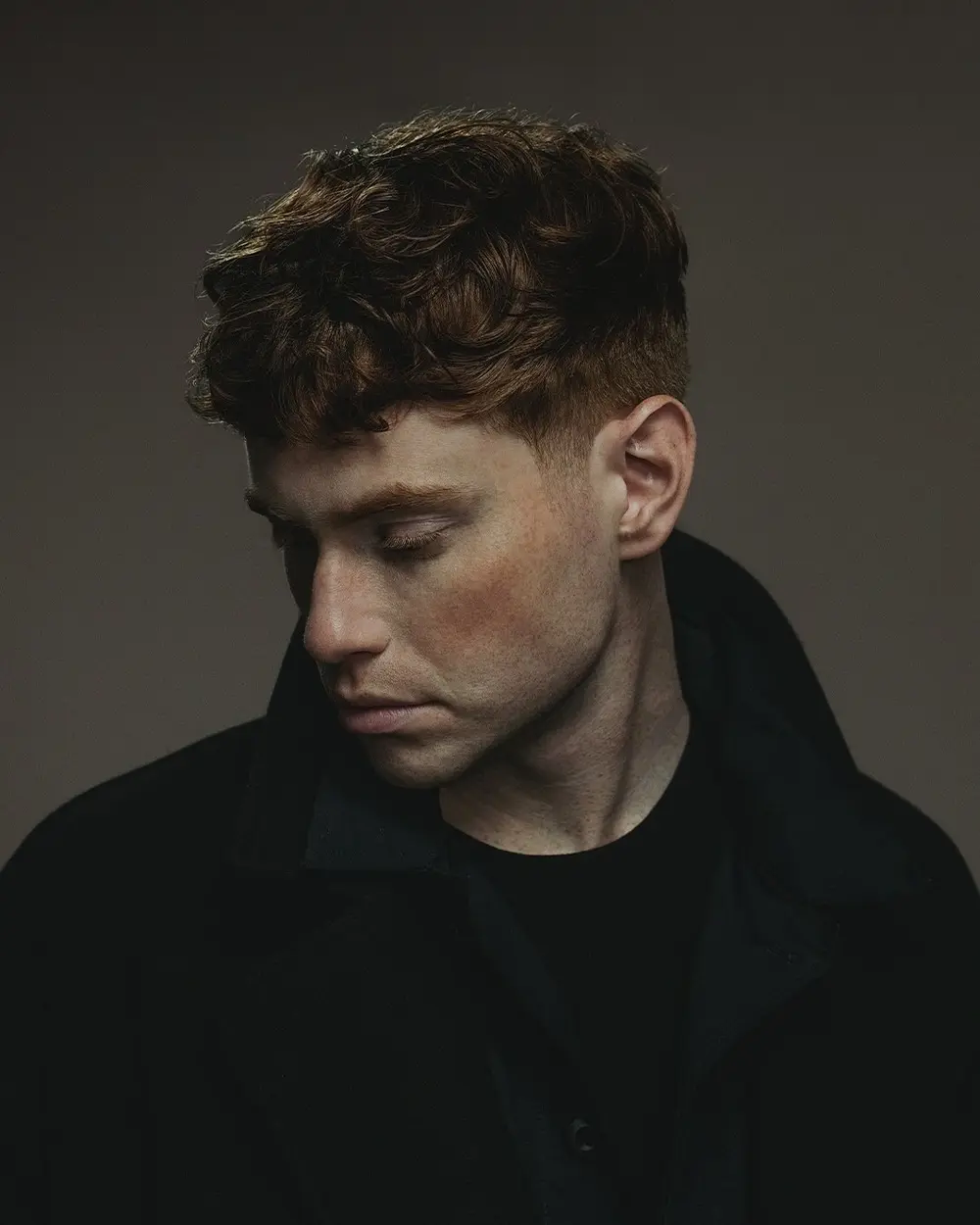
@stmntgrooming
Crop and balding. The crop haircut helps hide a high forehead and early balding signs. Fringe covers the hairline, while proper fade draws attention from problem zones. Choose French crop or classic variant — they work like camouflage.
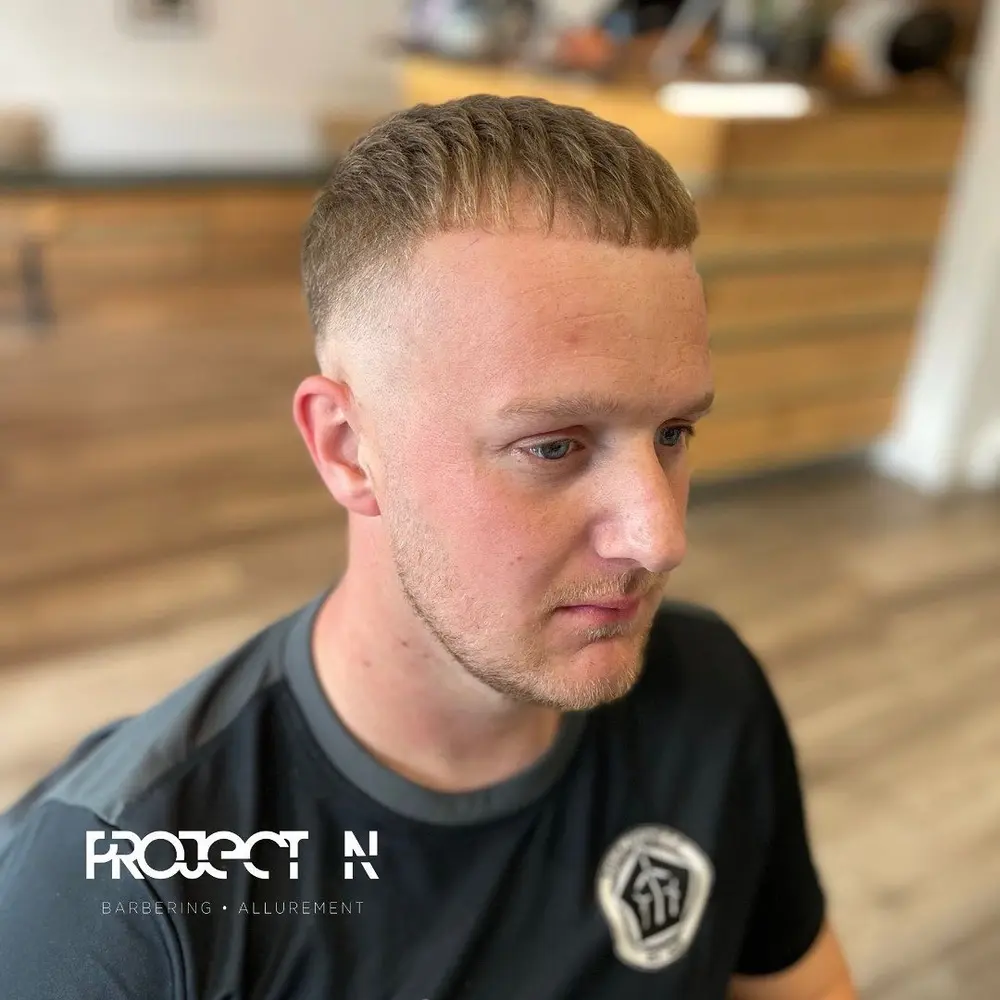
@_projectn_
Who Should Skip the Crop?
Let's be real — this cut doesn't suit everyone. Better to know the limitations now than feel disappointed after the barber visit. Three main categories of guys who should think twice before choosing crop or adapt the cut to their features.
Guys with cowlicks at the hairline. If you've got a pronounced cowlick at the forehead, the fringe will stick sideways despite any styling. You'll need strong hold products or pick a different cut.
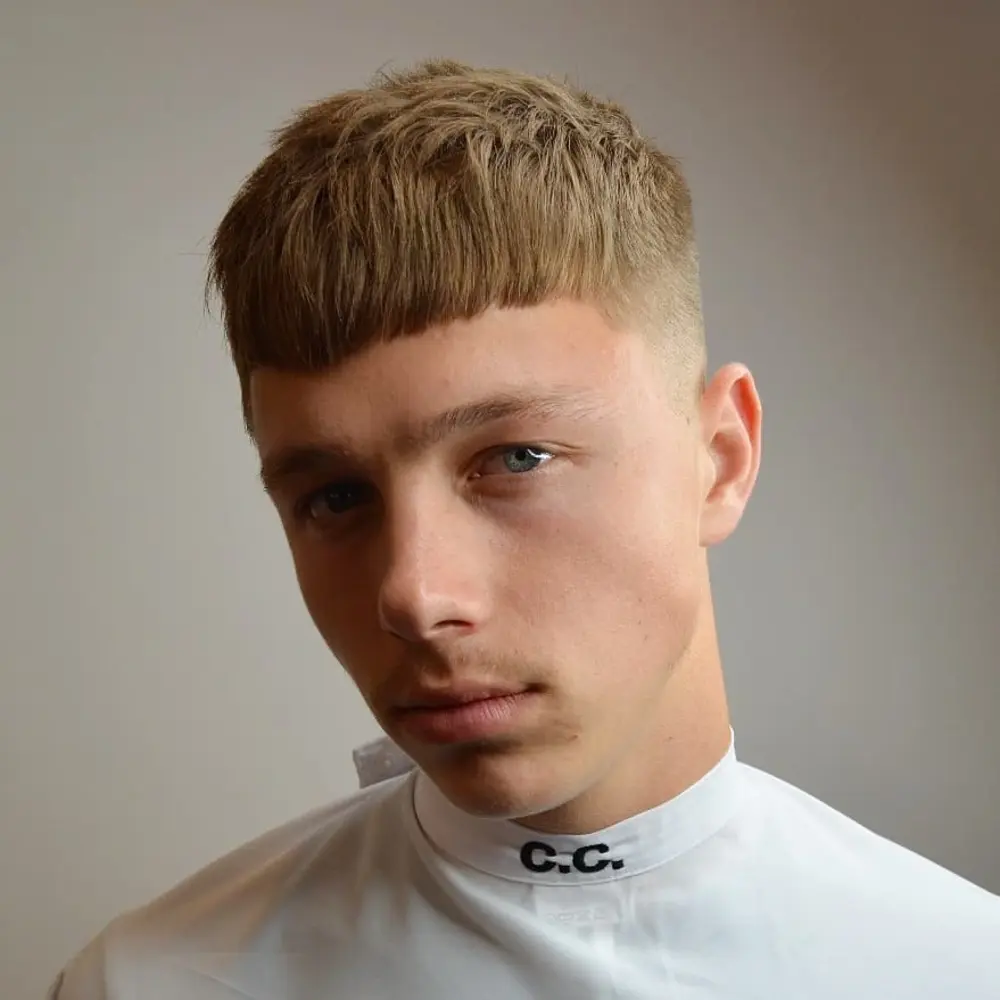
@claubadass
Irregular skull shape. If the back of your head is very flat or conversely, too prominent — overly short sides will emphasize this flaw. In that case, better choose low fade or leave temples slightly longer.
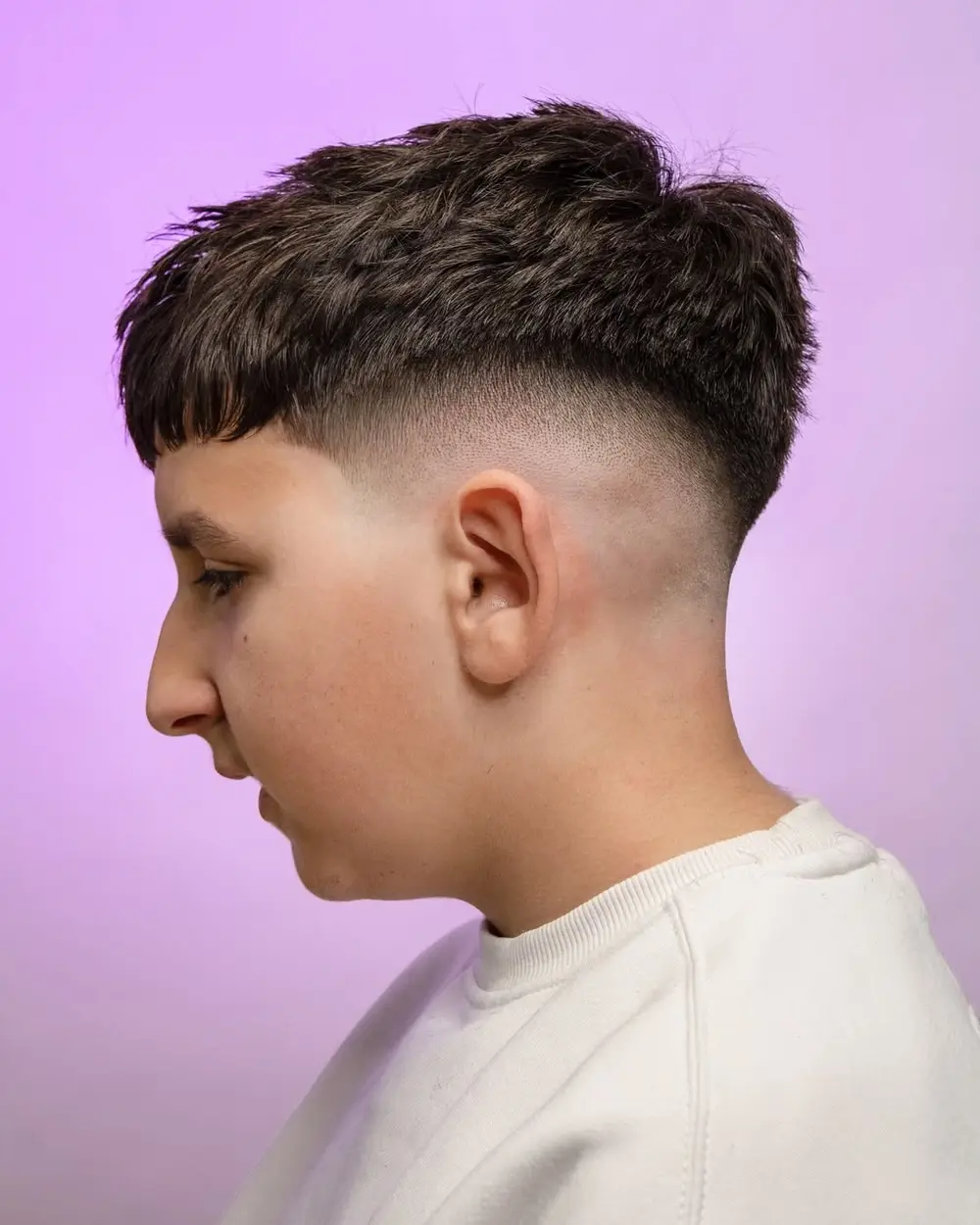
@montorebarber
Very fine straight hair without volume. If hair lies "flat" — crop looks like a "bowl cut." Texture can save the situation, but you'll need daily work with volume powder.
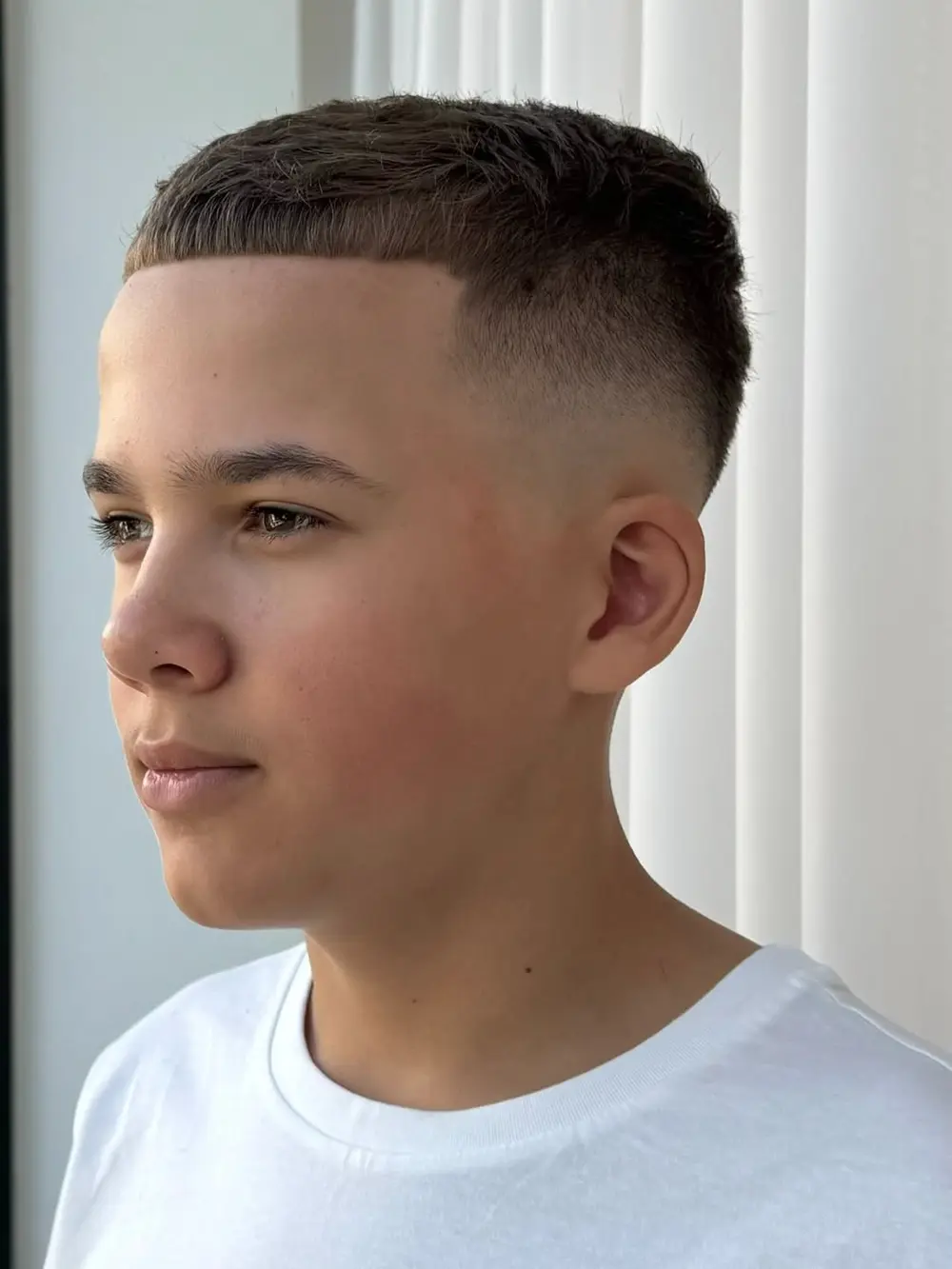
@mizu_lab72
How to Maintain and Style Crop?
The biggest lie about crop — that it's a "roll out of bed" haircut. Yeah, it's easier than a pompadour or classic side part, but completely zero maintenance makes hair look sloppy. Good news: proper styling takes 5 minutes max, and you don't need an arsenal of ten products. Two or three products and understanding how they work — that's all.
Top Styling Products
Understanding the difference between powder, clay, and spray — half the battle. Each product tackles a specific task, and using the wrong one can wreck the entire look.
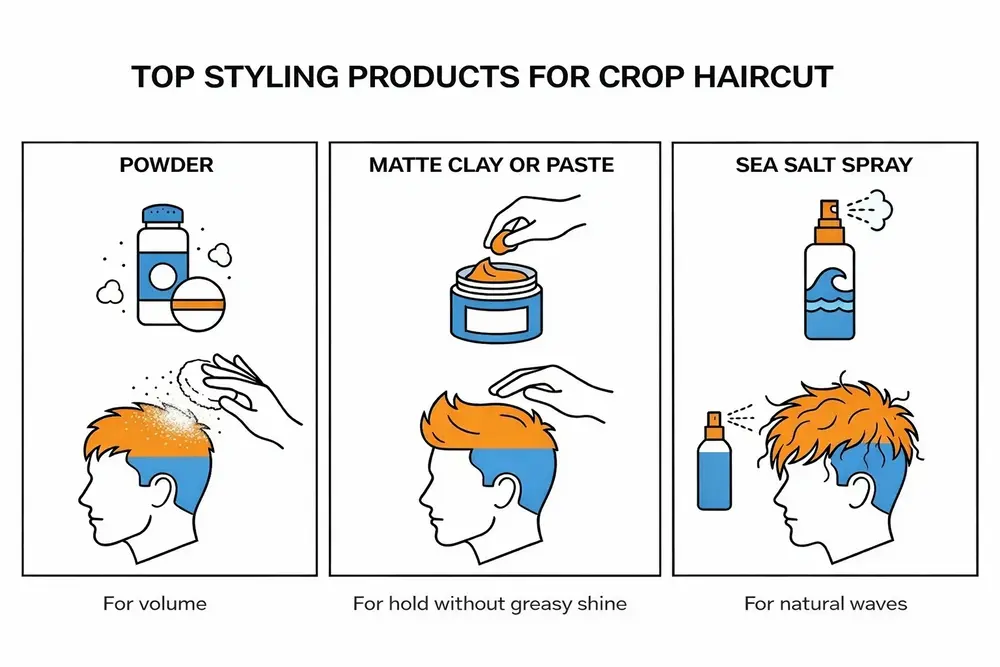
Volume powder. Must-have for textured crop. Apply to dry roots, rub in your palms and "pinch" hair with fingers, creating volume and texture. Hair looks natural, not glued together.
Matte clay or paste. For hold without greasy shine. Apply to damp or dry hair, shape the fringe and direction. This paste holds all day but still lets you rework the style.
Salt spray. For that "surfer" effect — natural texture with slight messiness. Works for long crop or curly hair. Spray on damp hair, scrunch with hands, skip the blow dryer.
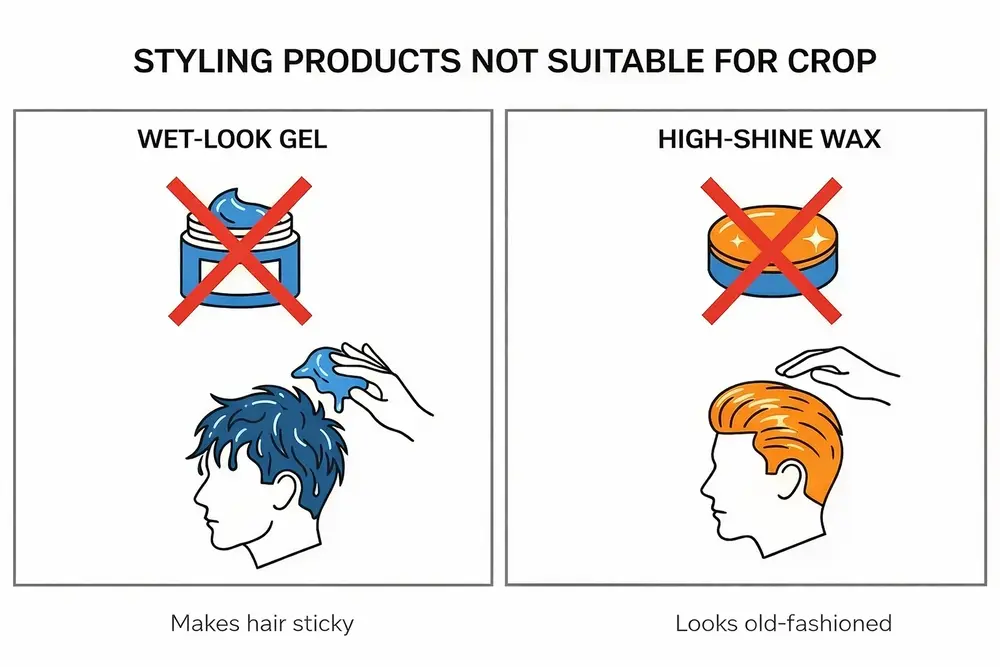
Products That Don't Work
Gels with wet-look effect — kills the entire crop vibe. The cut relies on dry texture, while gel makes hair look glued and lifeless. Also skip wax with strong shine — fits classic men's styles, not modern crop.
How Often to Refresh Crop at the Barber?
The cut loses shape after 3 weeks. If you want crop looking fresh — visit your barber every 3-4 weeks. Top can be trimmed less often, once every 1.5-2 months, depending on hair growth rate.
How to Cut Crop: Technical Details
Crop seems like a simple cut until you pick up the scissors. Clean geometry, smooth transition, proper texture — every element demands precision. For rookie barbers, this is the cut where you learn to work with form and transitions. We break down three critical moments that separate professional work from amateur.
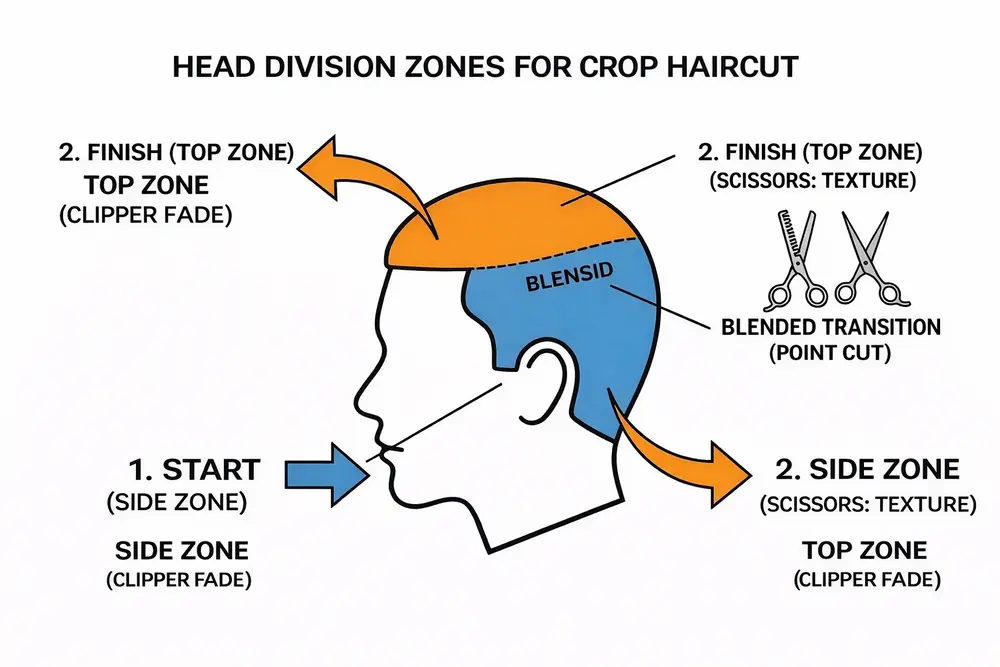
Head Division Scheme
Crop haircut operates on two-zone principle: side zone (temples and nape) and top zone (crown and frontal section). Logical work sequence — first process the side zone with clippers (fade), then work the top zone with scissors. Transition between zones — toughest part, needs thinning scissors or point cut technique.
Rookie Mistake
Too aggressive thinning creates "holes" in the hair — instead of texture you get patchy mess. Second mistake — visible "steps" in the transition from short to long. Fade must be smooth, no harsh lines.
Working the transition takes practice. Use half-open clipper for the transition zone, remove hair gradually, no sudden moves.
How to Properly Finish the Fringe
Point cut (teeth technique) creates texture and natural look. Hold scissors vertically at 45-degree angle, make short "bites" along the fringe line. Don't cut horizontally with straight cuts — that's outdated technique.
For classic crop you can use straight cut, but even then better go over the edges with thinning scissors — adds softness.
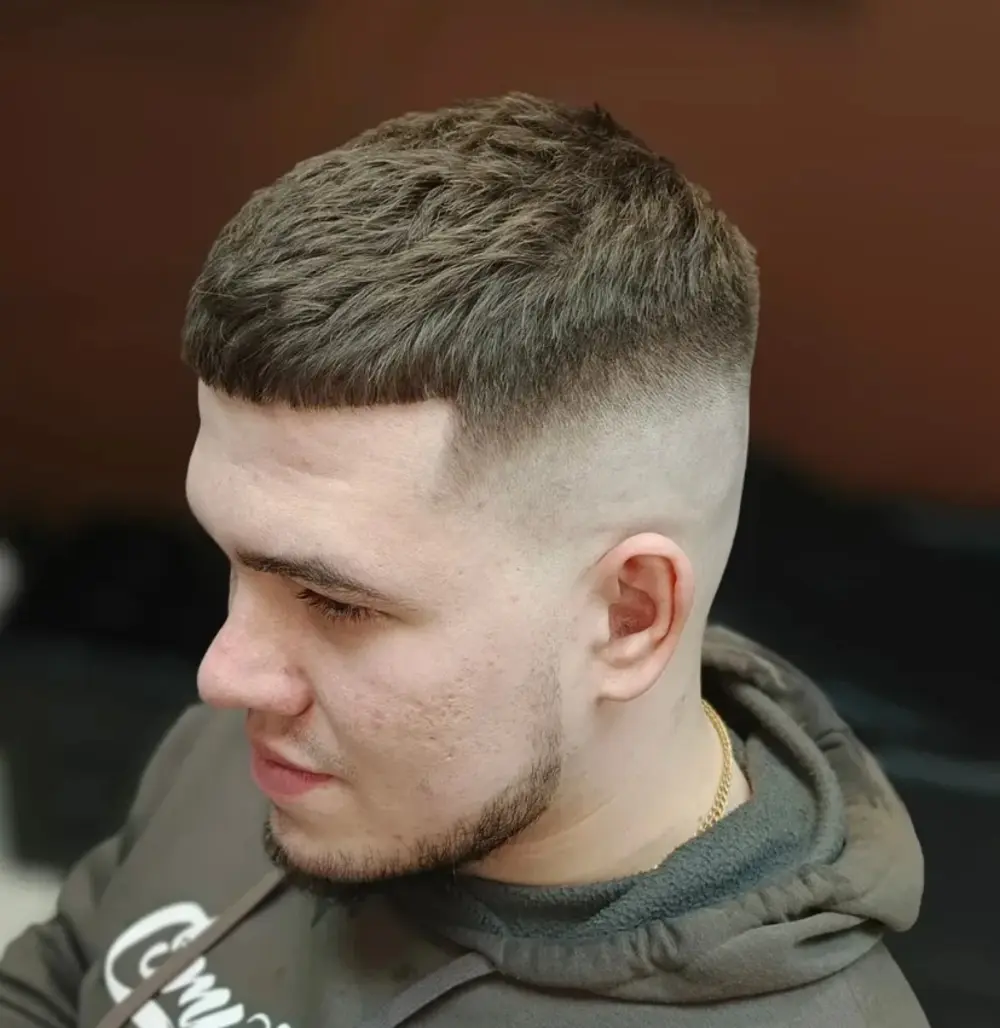
Top 20 Crop Haircuts from Barbers
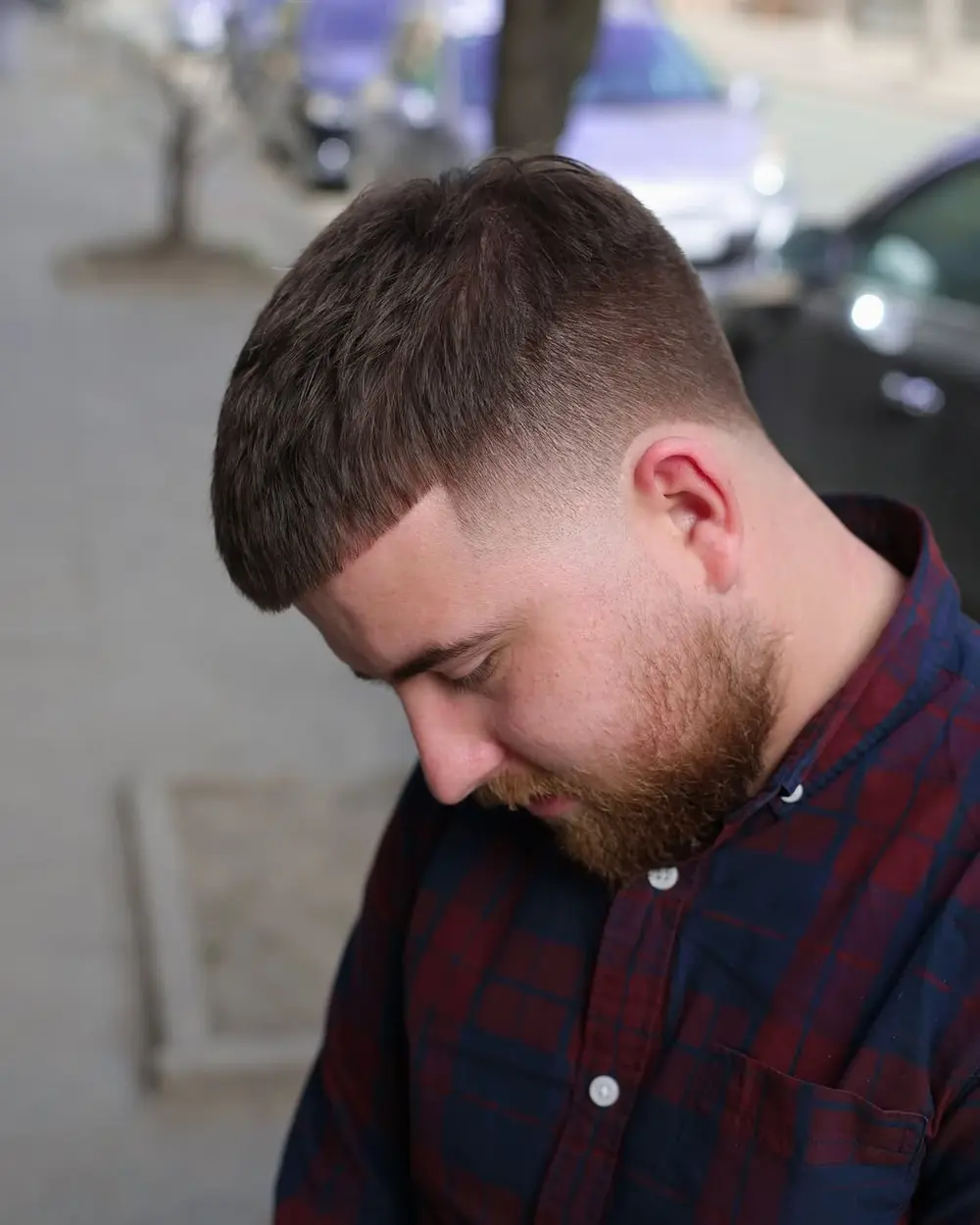
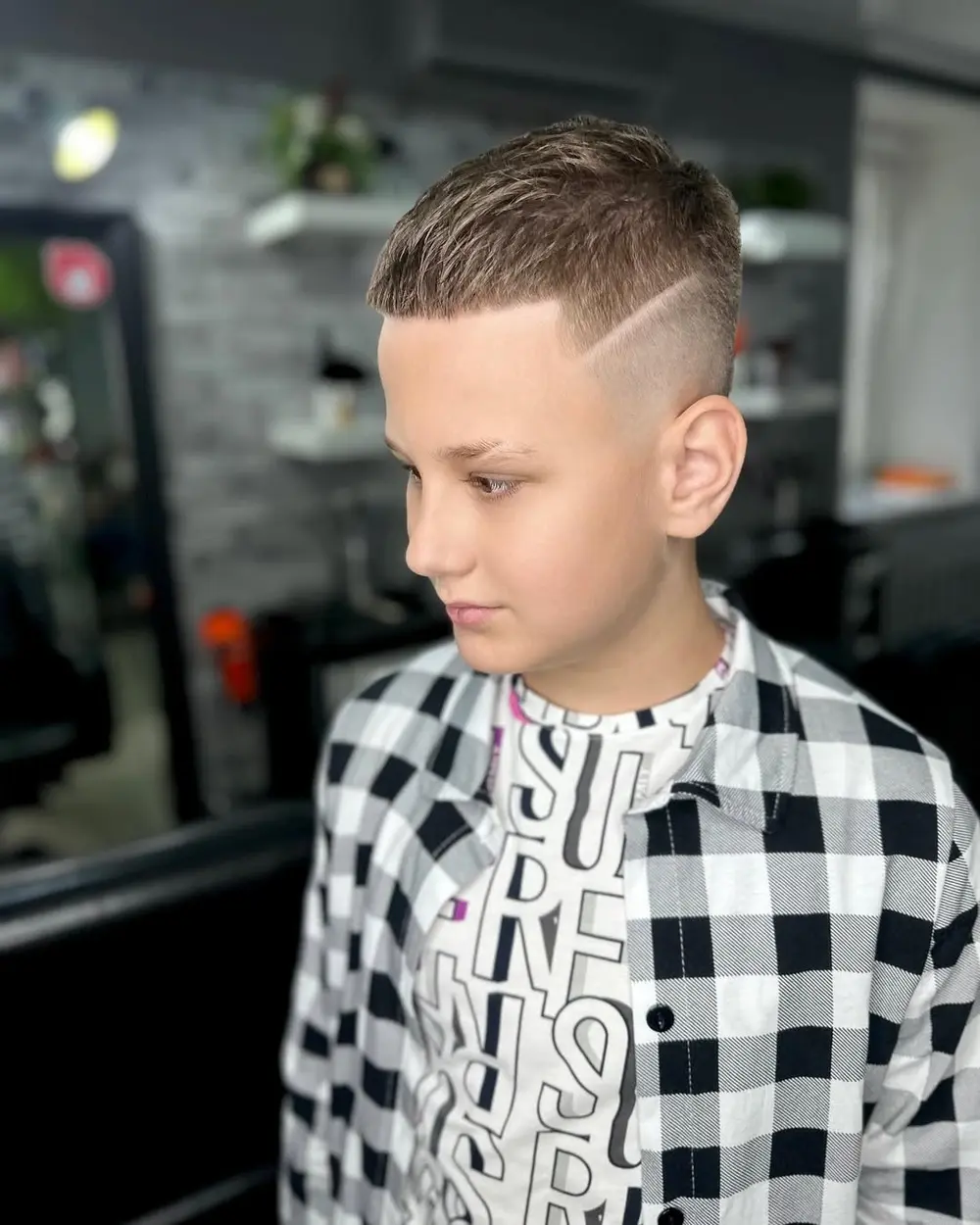
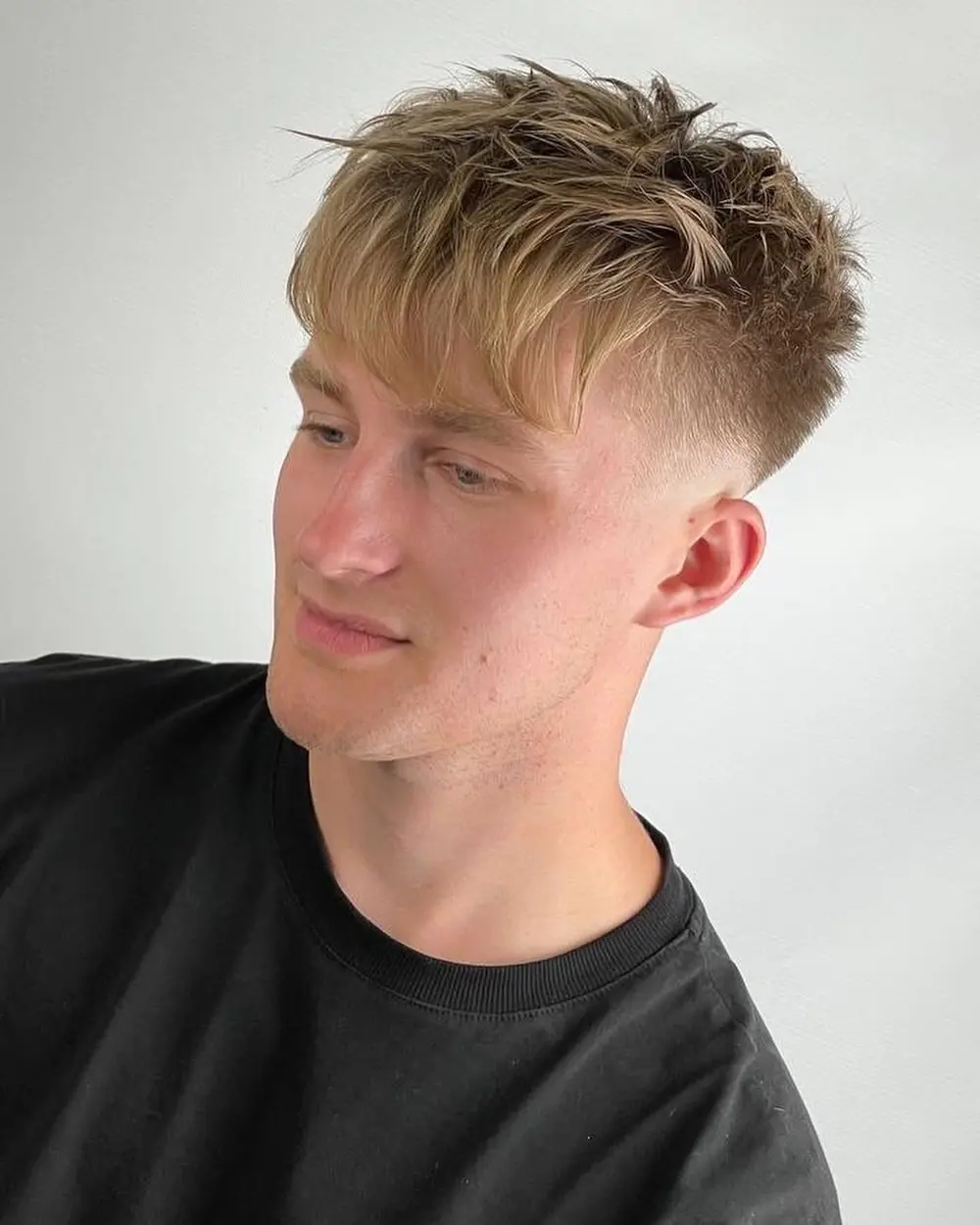
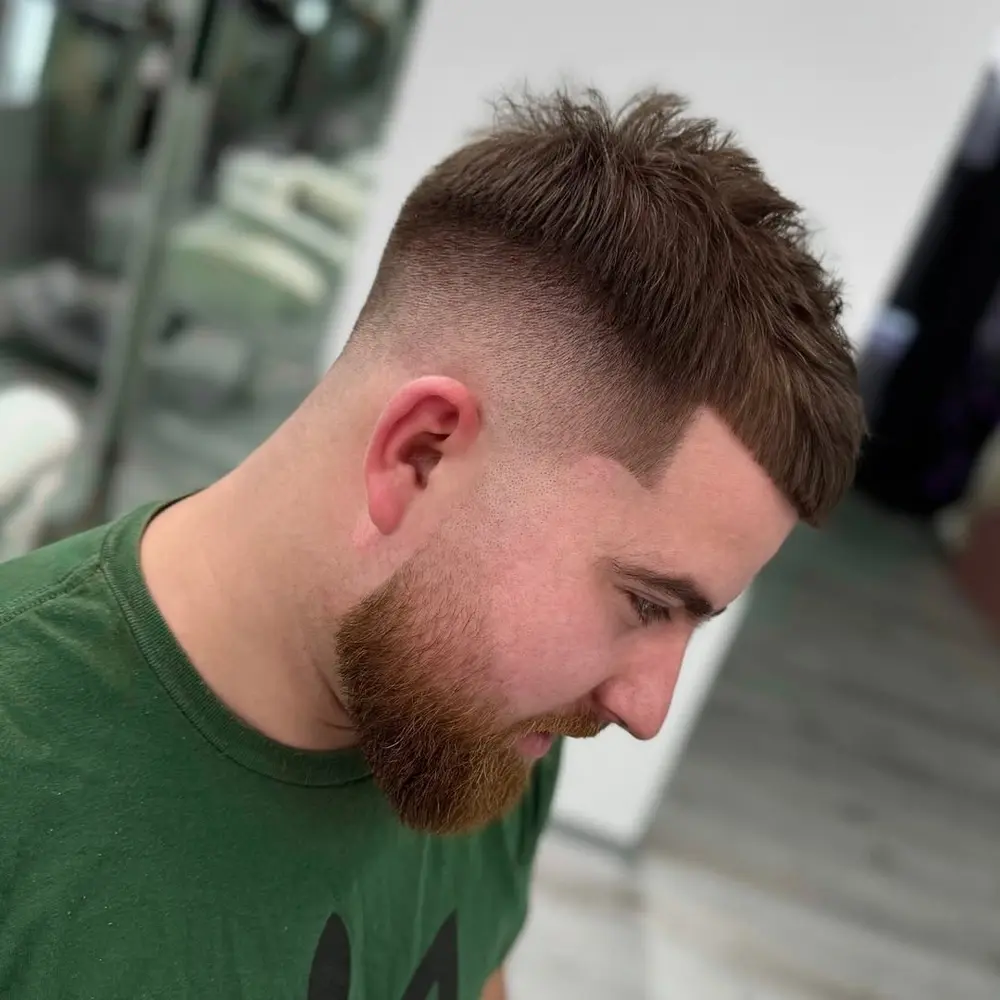
Theory's good, but without real examples hard to picture how crop looks on actual people. We collected 20 best works from barbers: different face types, hair structures, execution styles.
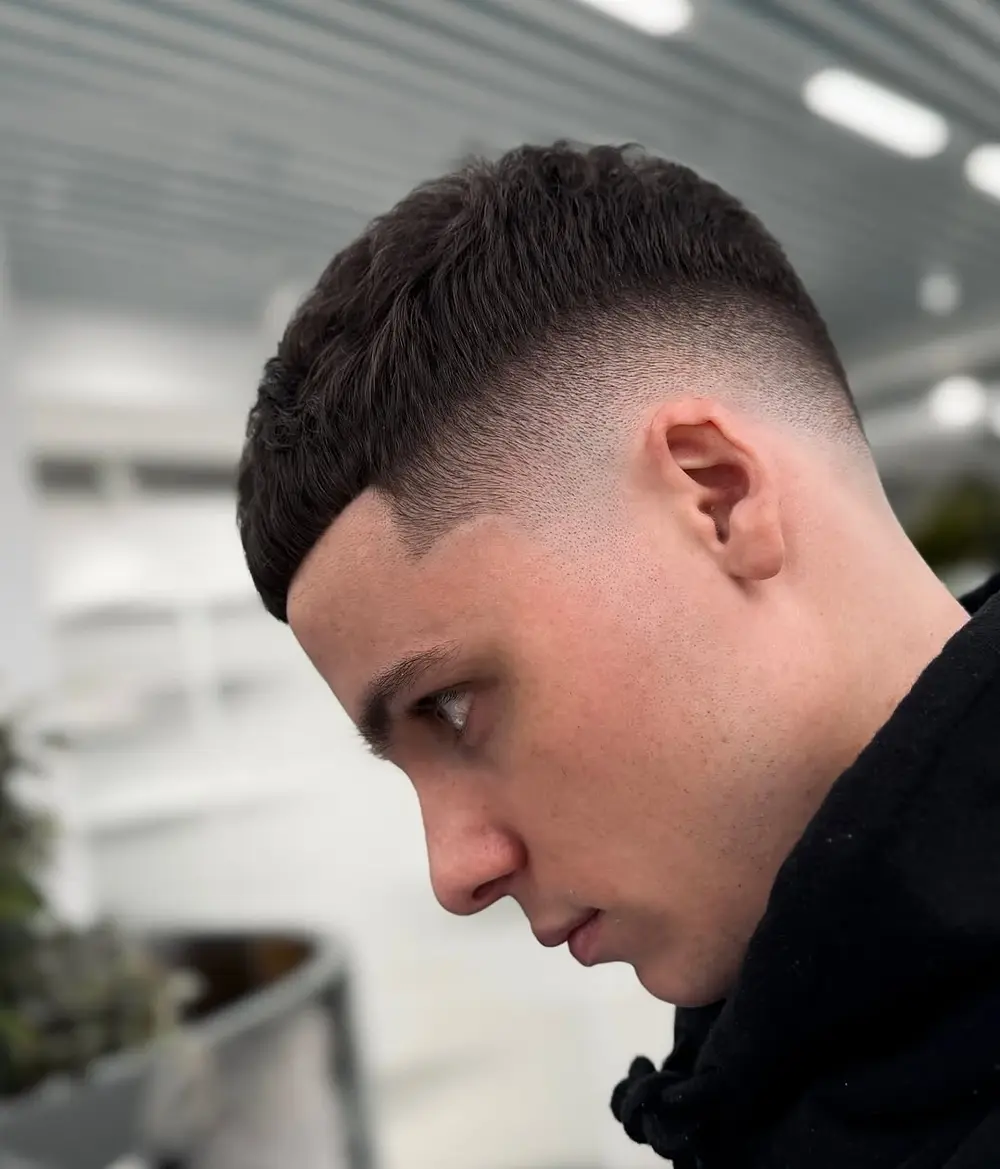
@vbodnarr
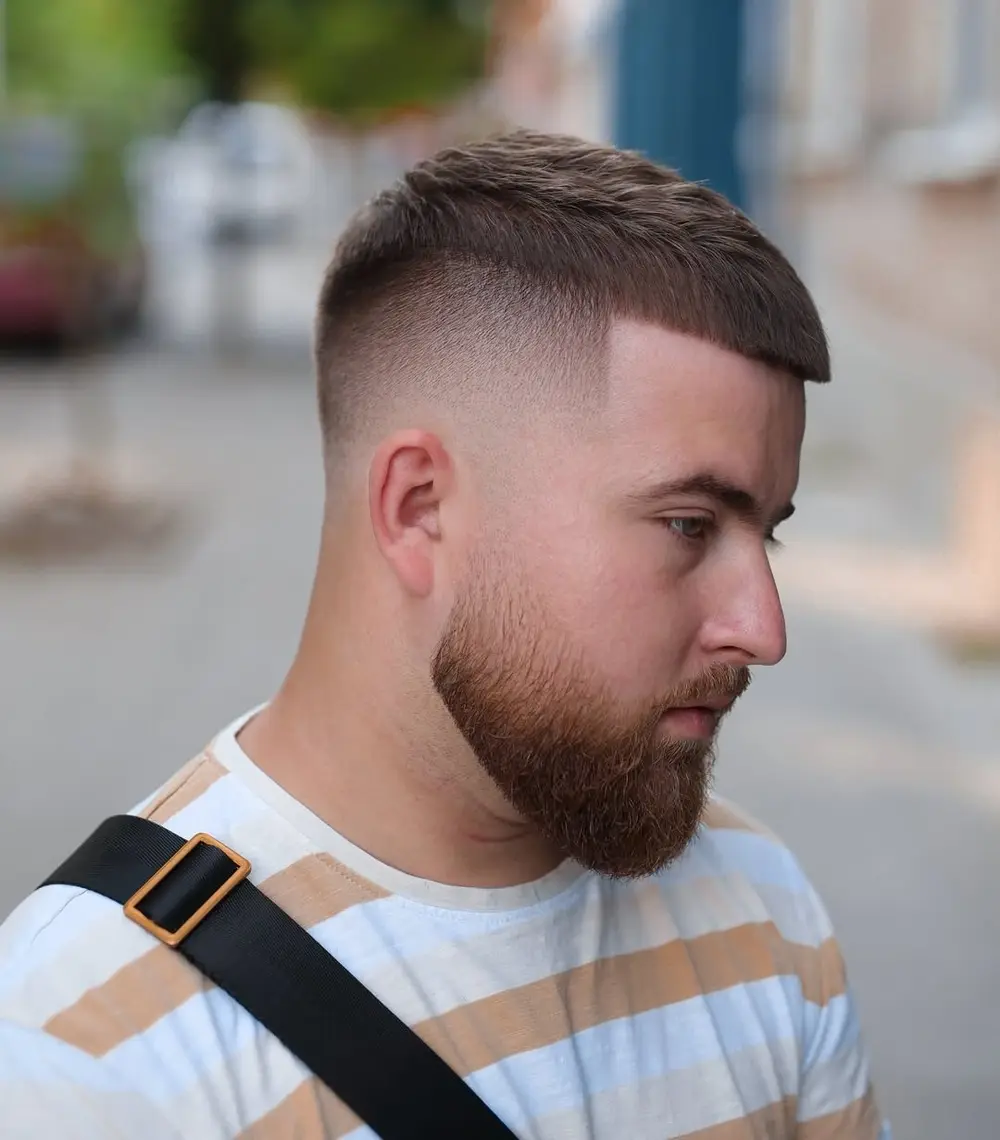
@vbodnarr

@annikabarbergirl

@bublik.hairproject
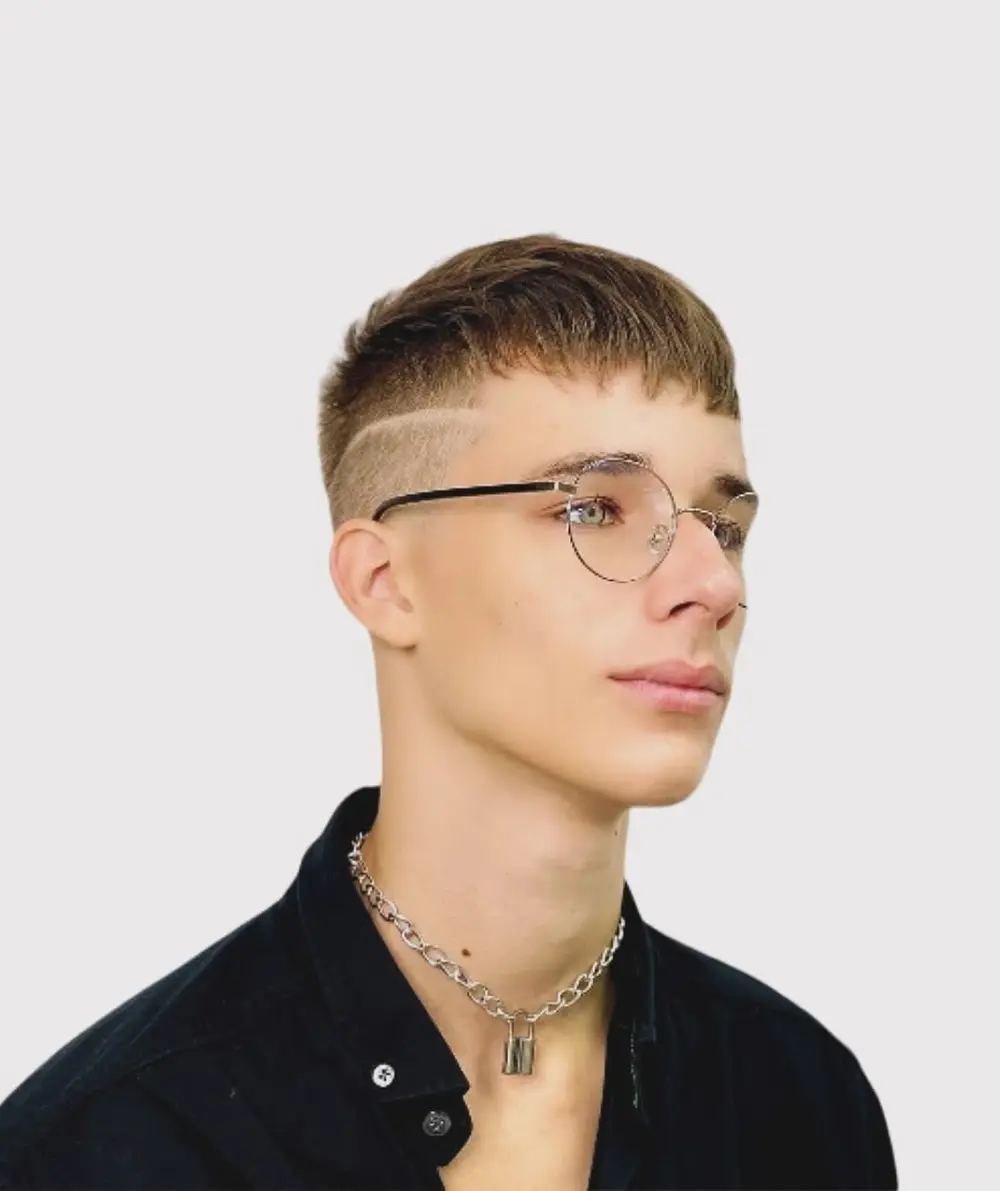
@marinanaiman_pro
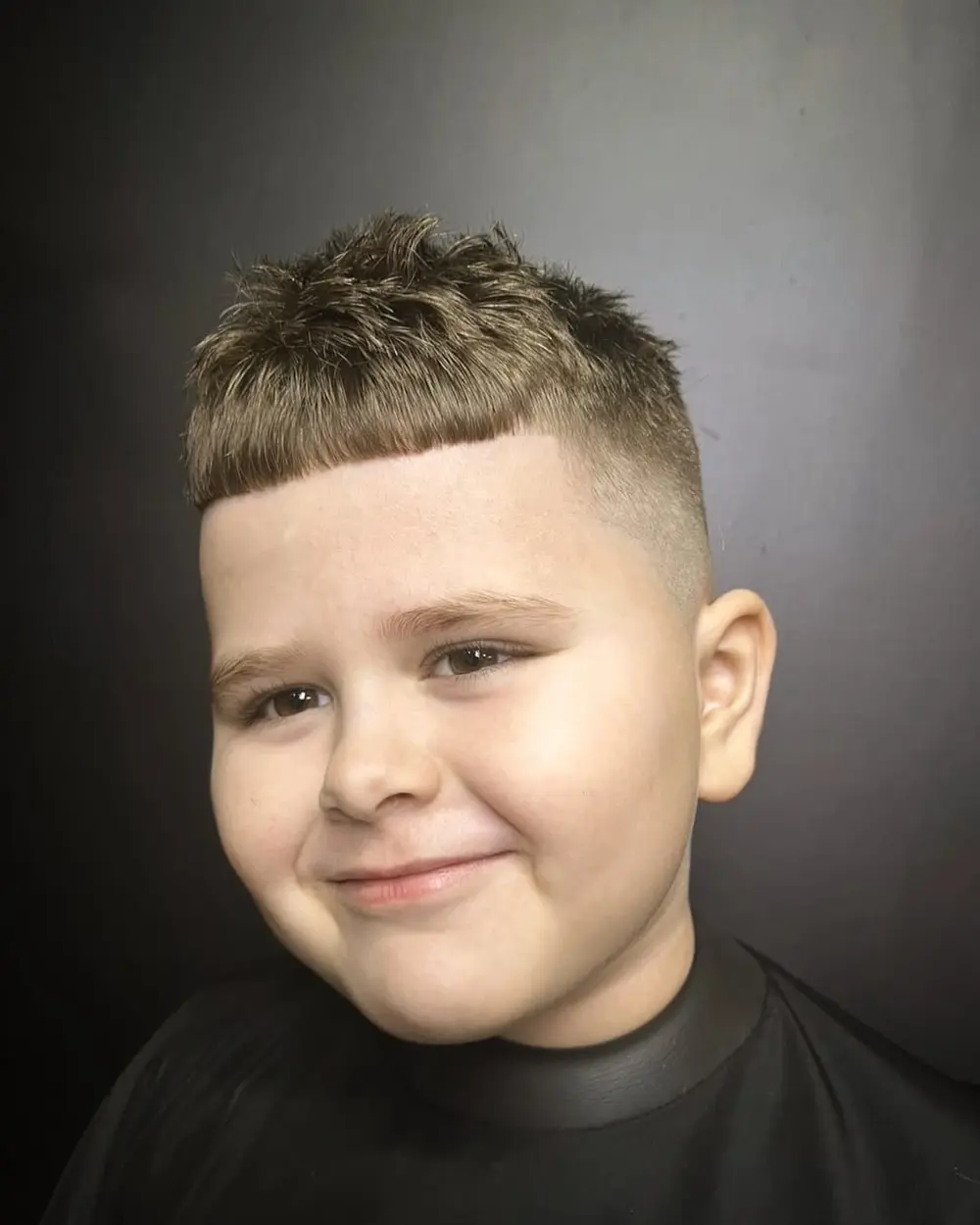
@barbershopkyzyl
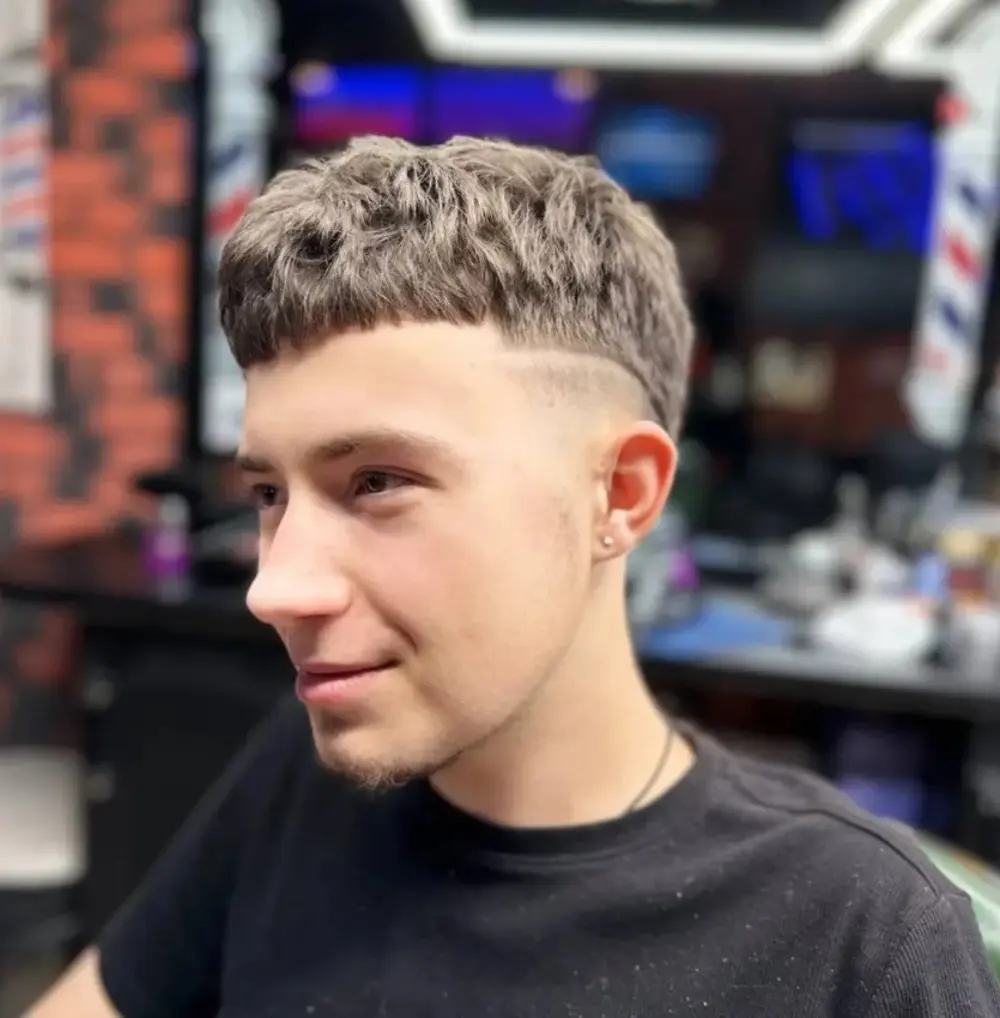
@oldboy_ussuriysk
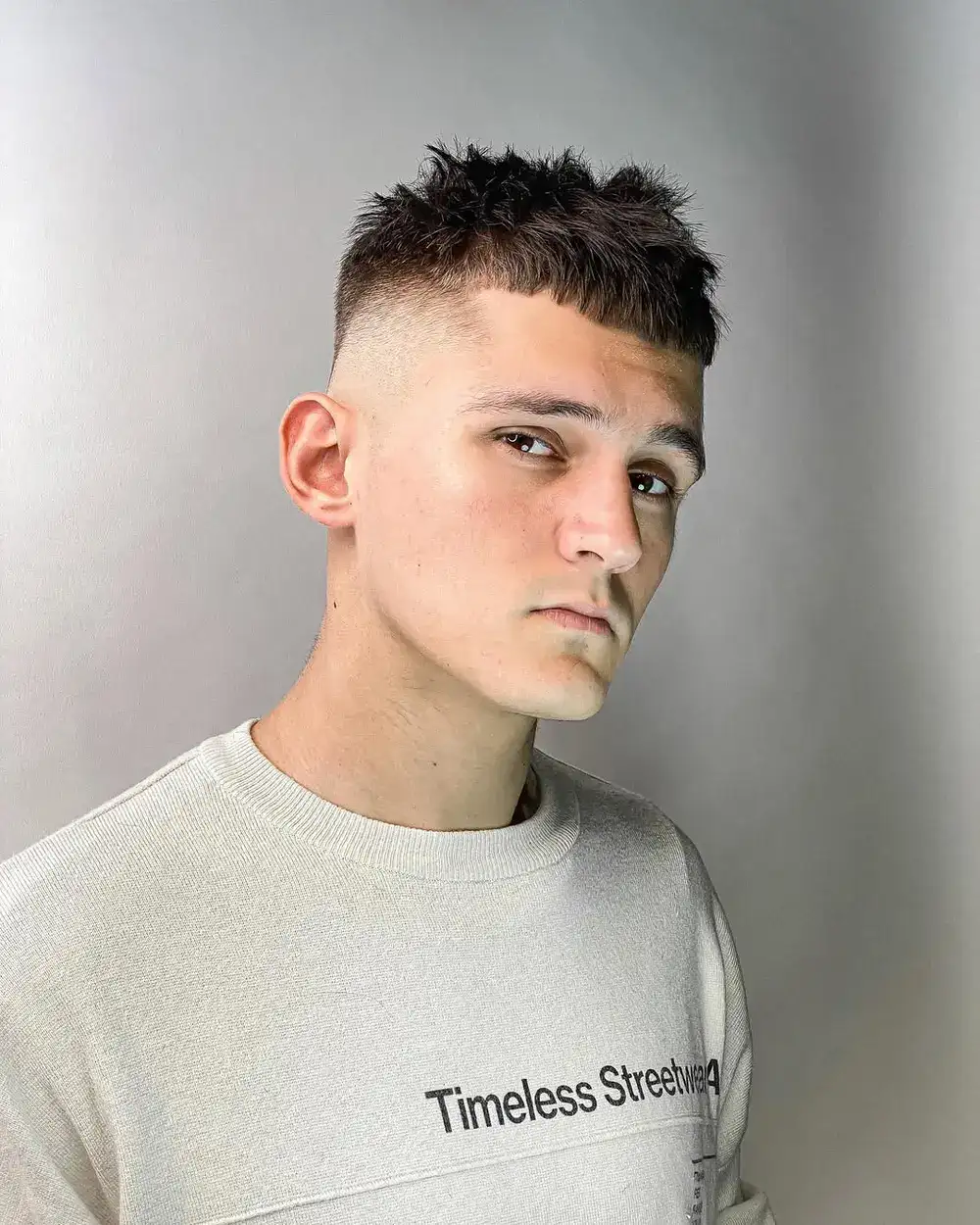
@kudinovproject
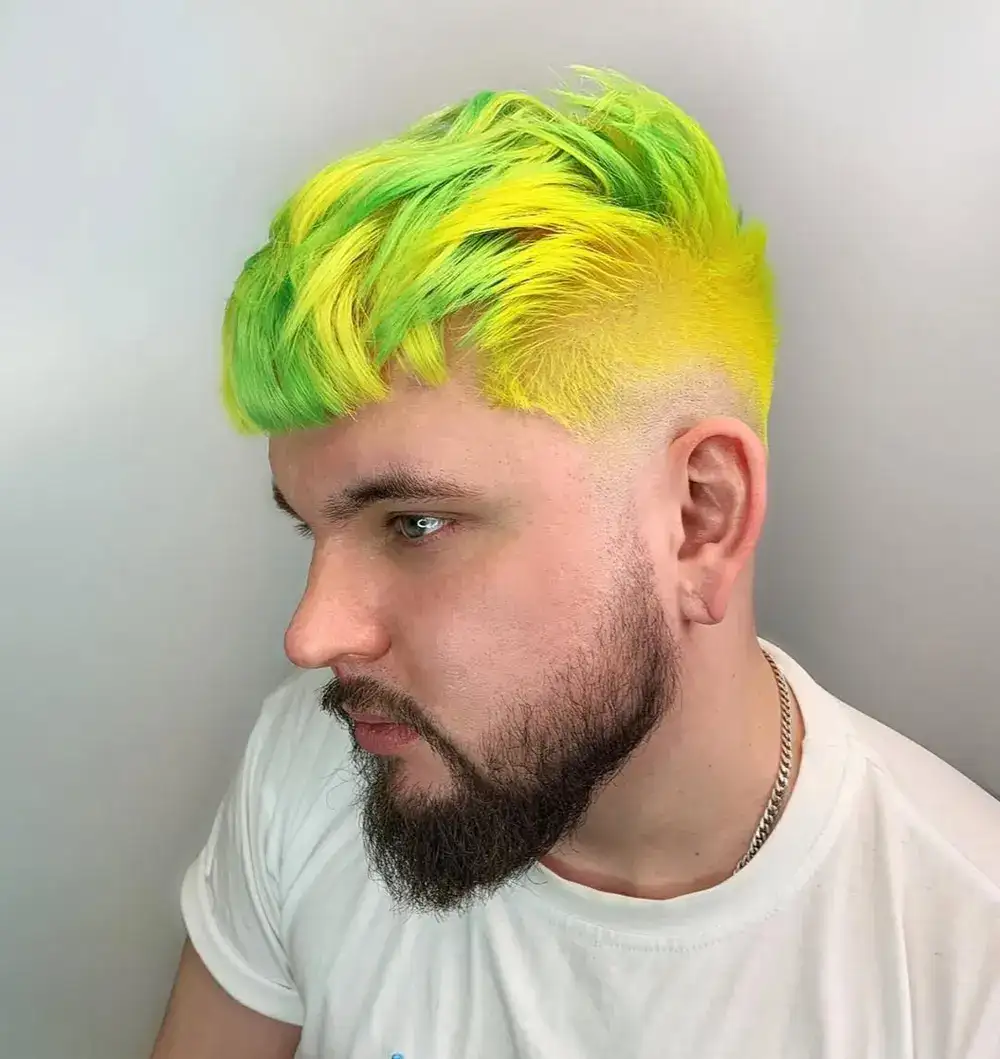
@sabirovahair
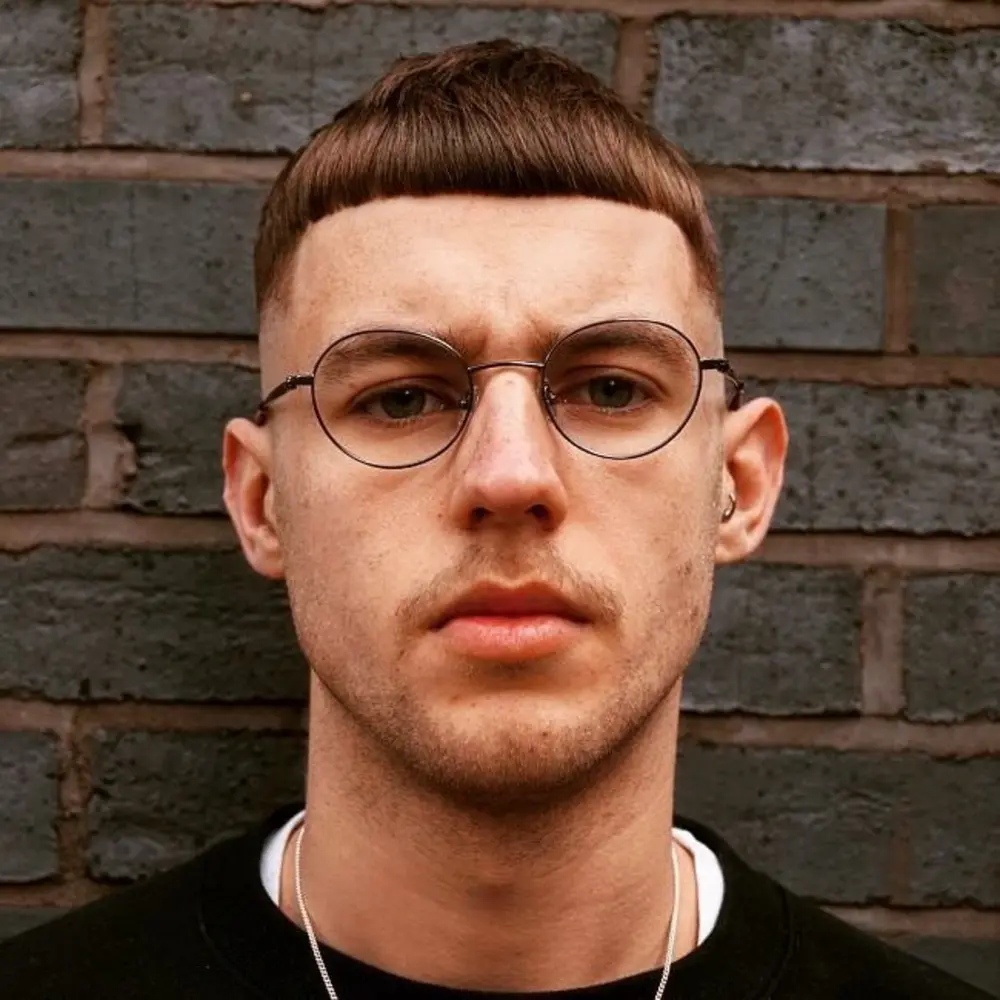
@darlen_vrn
@vbodnarr
@granat_2017
@rai_studio_by
@vbodnarr
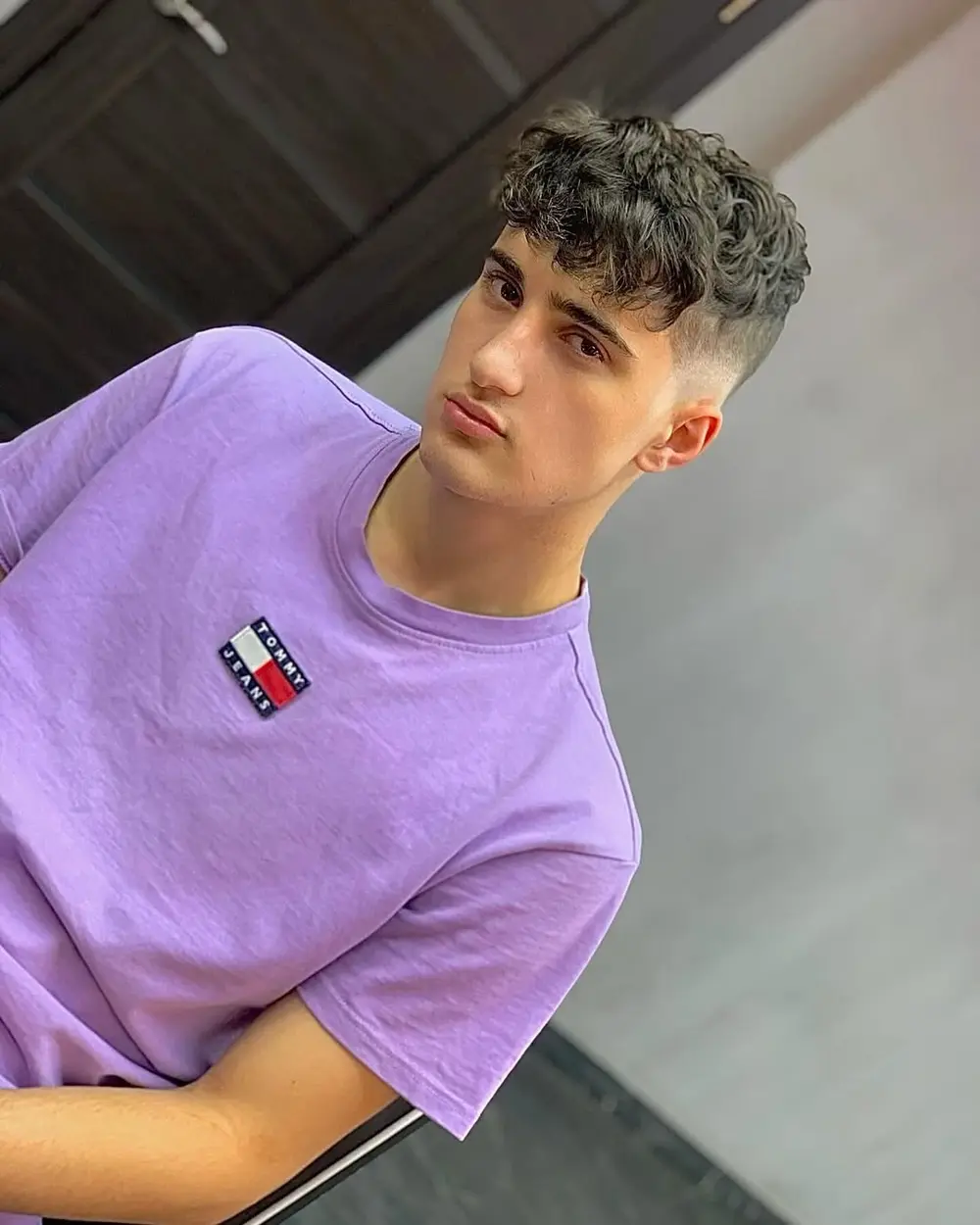
@kris_ngamen
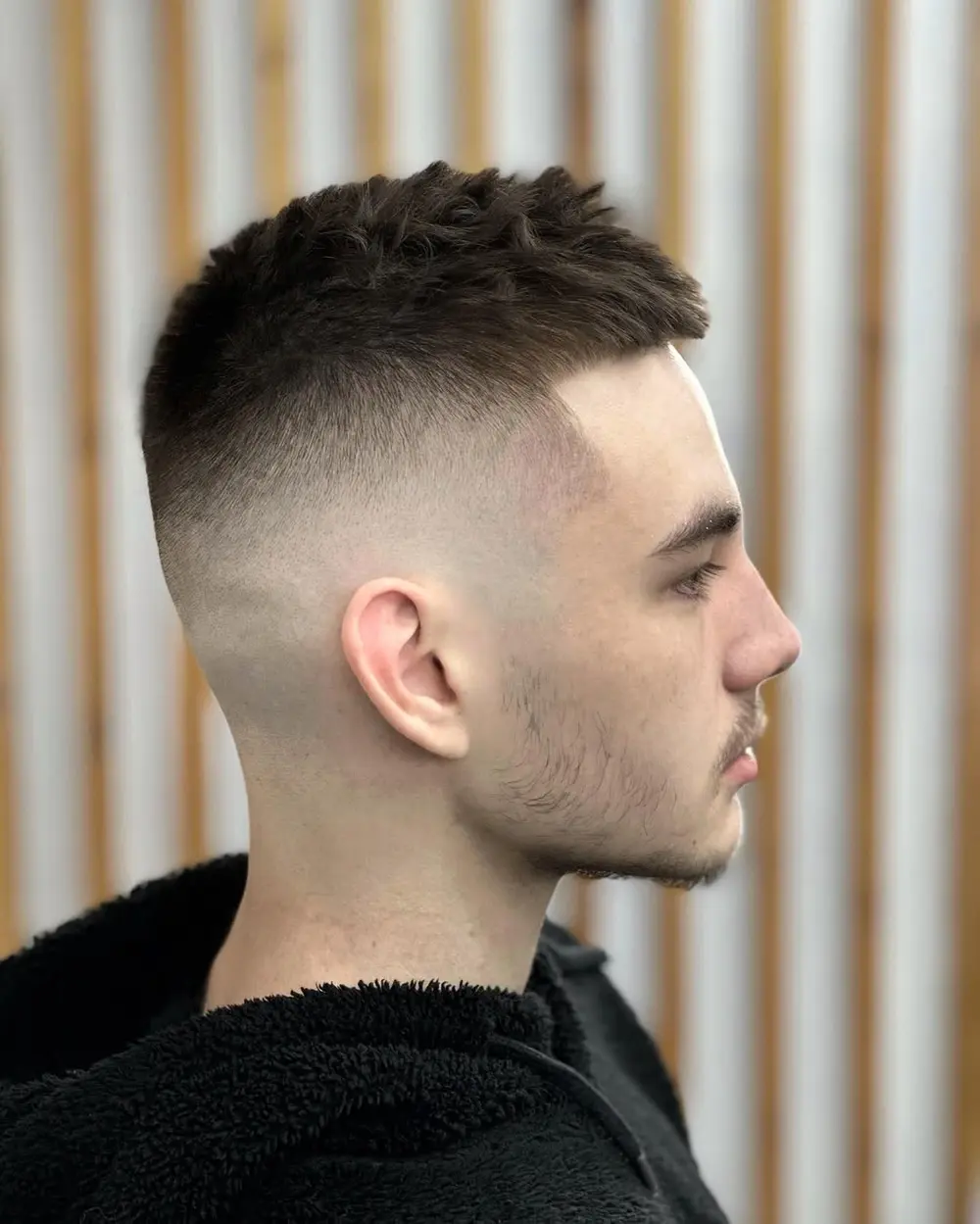
@ghost_barbershop_krg
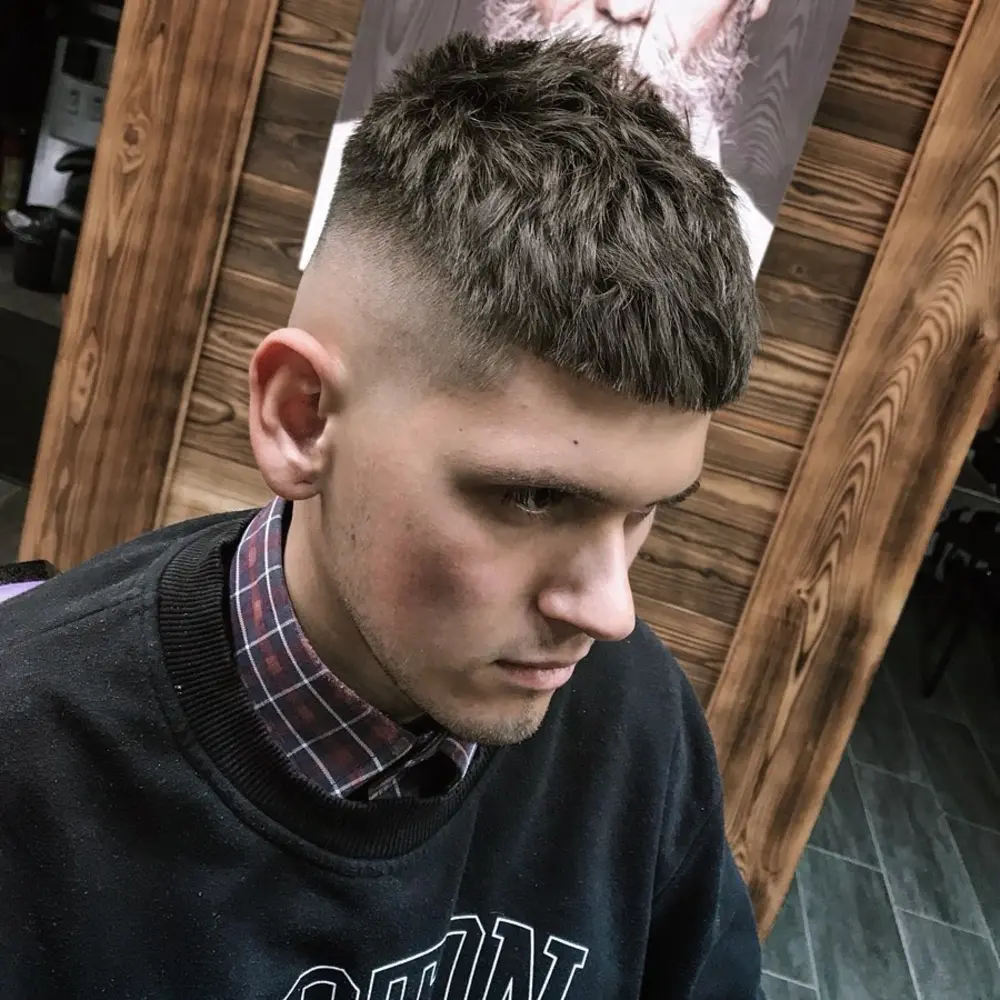
@barbergomel.by
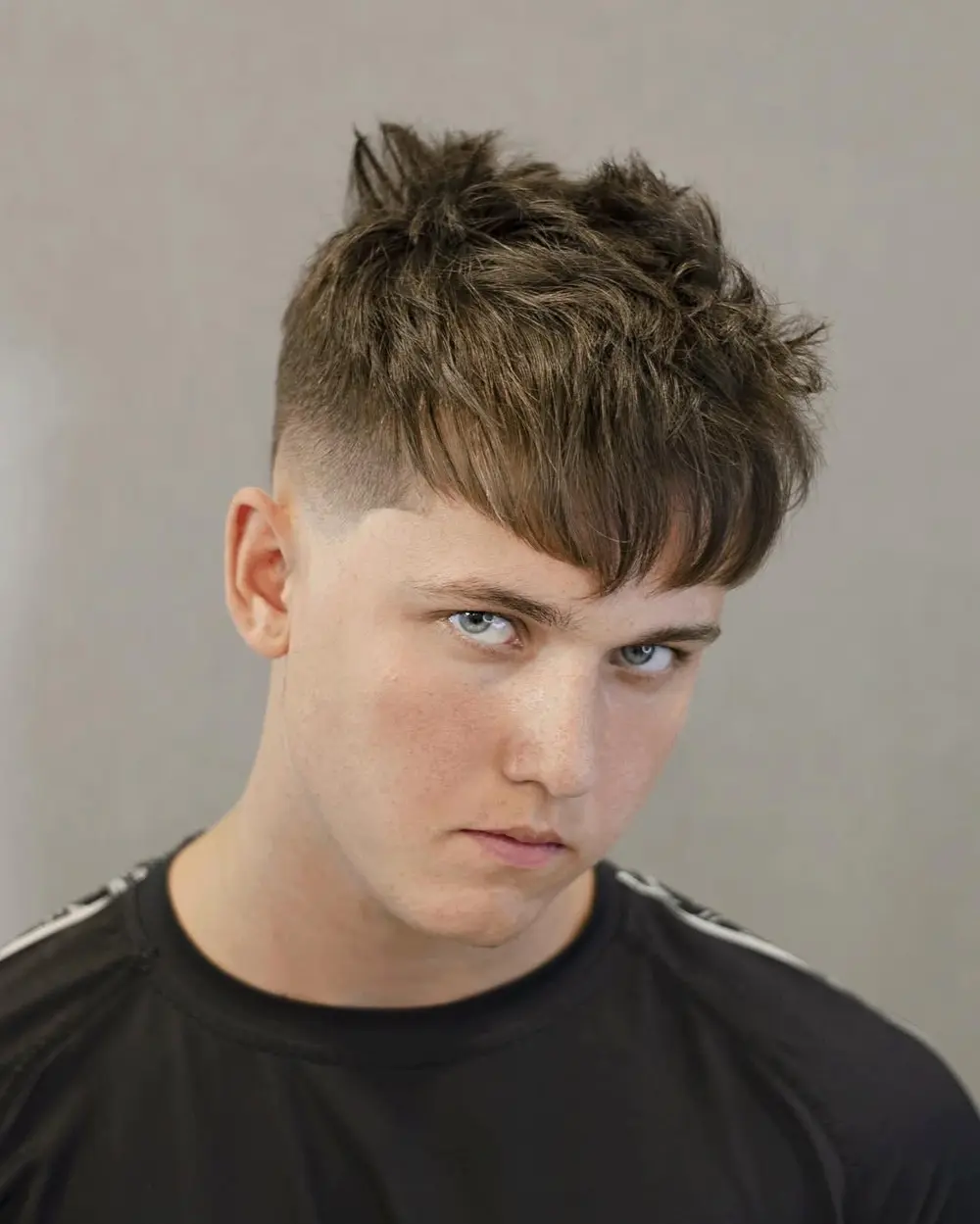
@barber_ledi_landys
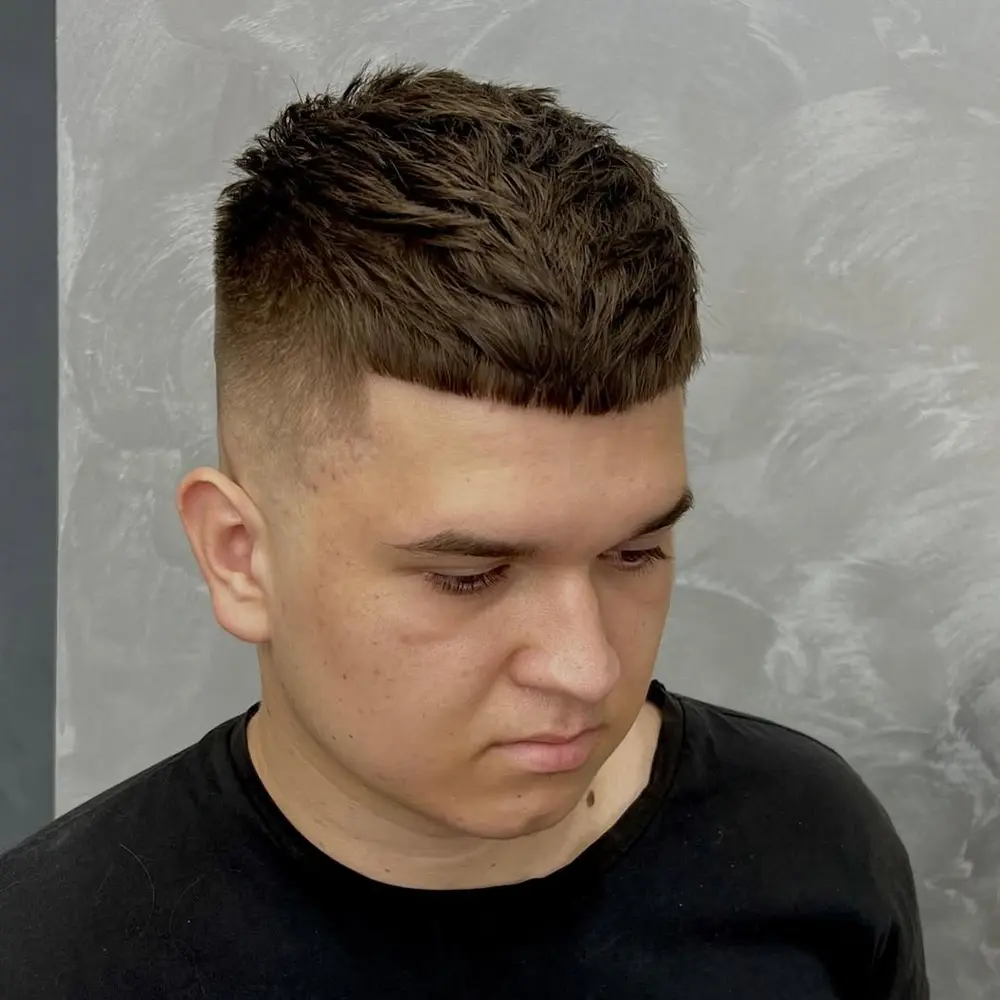
@kseniya_savetina
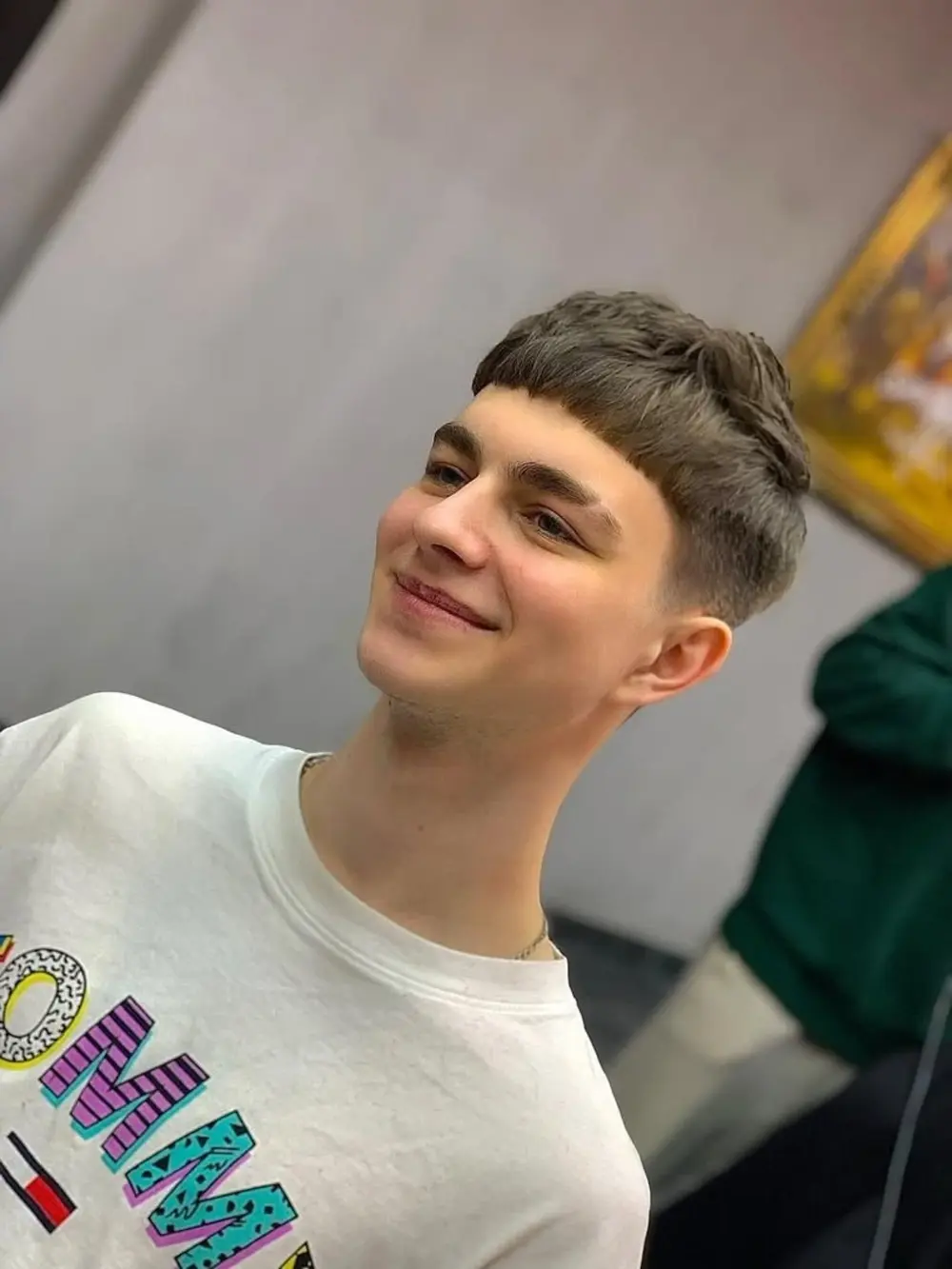
@kris_ngamen
Crop — combination of ruggedness, style, and practicality. The cut works for office and gym, dates and business meetings. Minimum styling, maximum masculinity.
Main rule: don't try cutting crop at home. This haircut demands understanding of head geometry and professional fade execution. One millimeter off — and the cut loses its form.
